As global supply chains continue to evolve, international companies are increasingly looking beyond traditional manufacturing destinations to reduce risk, improve resilience, and access new growth opportunities. In this changing landscape, India has emerged as one of the world’s most attractive manufacturing and sourcing destinations.
The combination of a large industrial base, competitive production costs, skilled workforce, supportive government policies, and a rapidly expanding export ecosystem has positioned India as a strategic sourcing hub for companies across North America, Europe, Australia, the Middle East, Africa, and Asia.
For global buyers, however, sourcing from India is not simply about finding the lowest-cost supplier. Success requires understanding India’s manufacturing strengths, regional industrial clusters, supplier ecosystem, compliance requirements, and quality management practices.
This guide explores why sourcing from India has become a strategic priority for global businesses and how buyers can successfully navigate the Indian manufacturing landscape.
Why India Is Becoming a Global Manufacturing Powerhouse
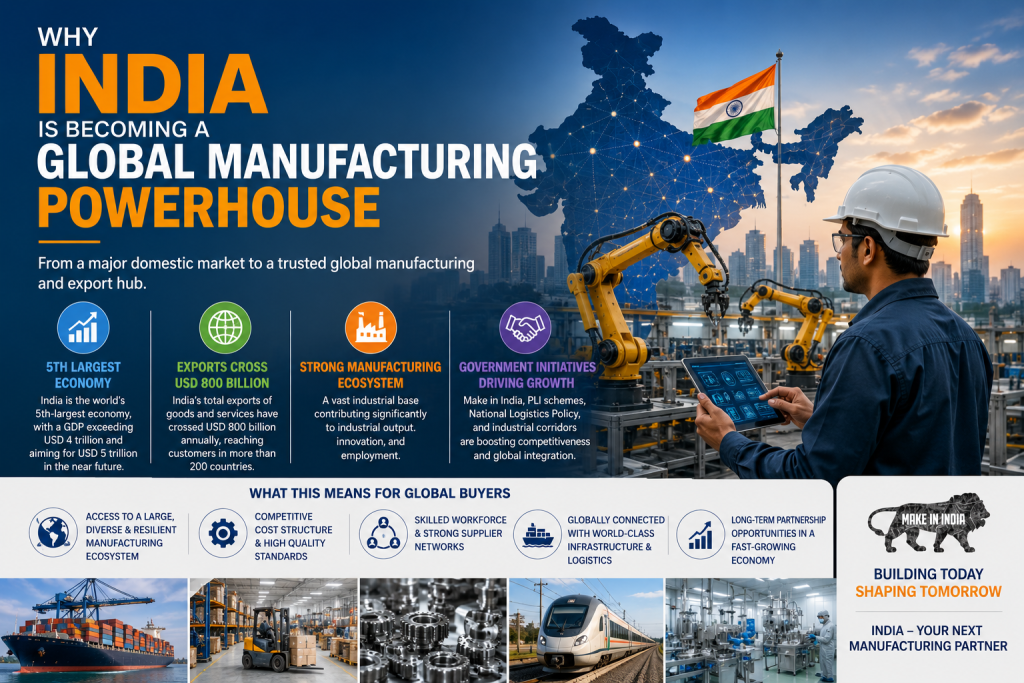
Over the last decade, India has transformed from primarily a domestic consumption market into a major global manufacturing and export center.
Today, India is the world’s fifth-largest economy, with a GDP exceeding USD 4 trillion and ambitions to become a USD 5 trillion economy within the next few years. The country’s manufacturing sector contributes significantly to industrial output and employment while serving customers in more than 200 countries.
India’s total exports of goods and services have crossed USD 800 billion annually, reflecting the country’s growing integration with global supply chains. Government initiatives such as Make in India, Production Linked Incentive (PLI) schemes, National Logistics Policy, and industrial corridor development programs are further accelerating industrial growth and export competitiveness.
For international buyers, this means access to a manufacturing ecosystem that is larger, more sophisticated, and more globally connected than ever before.
The Global Shift Toward Supply Chain Diversification
The COVID-19 pandemic, geopolitical tensions, shipping disruptions, and rising production costs in several traditional manufacturing locations have fundamentally changed how companies approach sourcing.
Many multinational companies are now implementing what is commonly referred to as a “China Plus One” strategy, seeking additional manufacturing bases to reduce concentration risk and improve supply chain resilience.
India has become one of the primary beneficiaries of this shift.
Unlike many emerging manufacturing markets, India offers a rare combination of scale, engineering talent, domestic demand, and export capabilities. Global companies can source products, establish contract manufacturing operations, and even build long-term production facilities while serving both domestic and international markets.
This dual advantage has made India particularly attractive for companies seeking sustainable long-term sourcing partnerships rather than purely transactional supplier relationships.
Key Manufacturing Sectors Driving India’s Export Growth
One of India’s greatest strengths is the diversity of its manufacturing capabilities. Rather than relying on a single industry, the country has developed strong expertise across multiple sectors.
Engineering and Industrial Products
Engineering goods represent one of India’s largest export sectors and are widely sourced by international buyers.
Indian manufacturers supply industrial machinery, pumps, valves, castings, forgings, fabricated metal products, electrical equipment, precision components, industrial tools, and specialized engineering solutions to global markets.
Many suppliers operate according to international quality standards such as ISO, CE, ASME, API, and customer-specific certification requirements.
The engineering sector is particularly attractive for buyers seeking custom manufacturing, low-to-medium volume production, and complex fabrication capabilities.
Automotive Components and Precision Manufacturing
India has established itself as a major automotive manufacturing hub and is home to thousands of component manufacturers serving leading global vehicle brands.
The sector has developed strong expertise in precision machining, forging, casting, injection molding, sheet metal fabrication, and assembly operations.
International buyers source a wide range of products including engine components, transmission systems, suspension parts, electrical systems, and aftermarket products from India.
The industry’s mature supplier ecosystem allows buyers to source both individual components and complete assemblies.
Textiles, Apparel, and Home Furnishings
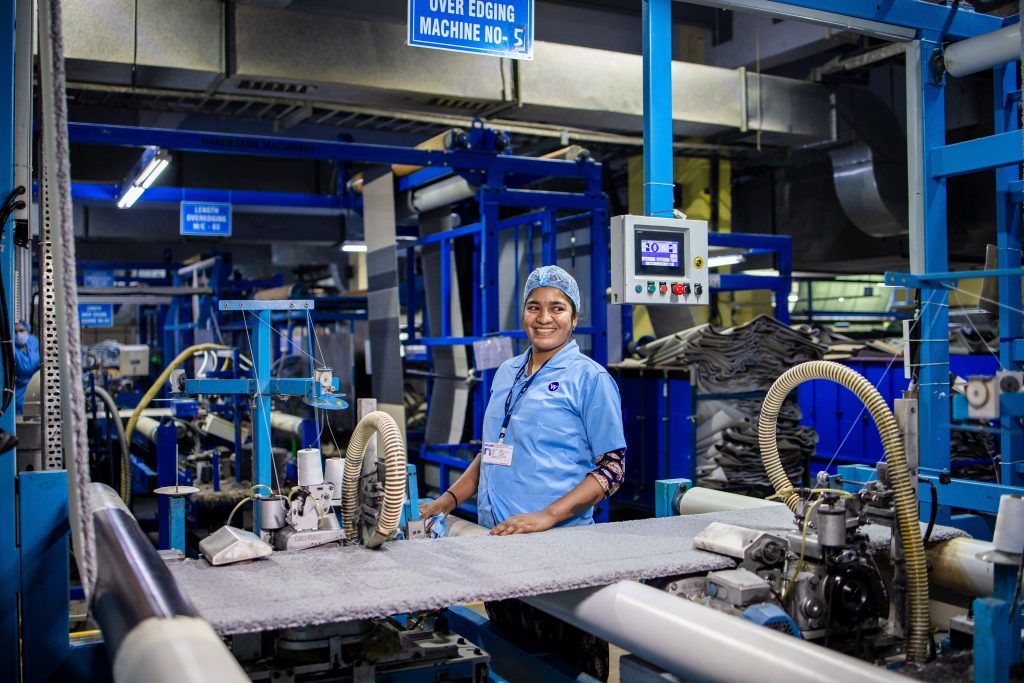
India remains one of the world’s largest producers of cotton, textiles, and apparel products.
The country offers sourcing opportunities across the entire textile value chain, from raw materials and yarn to finished garments and home furnishing products.
Global buyers regularly source:
- Apparel and fashion products
- Home textiles
- Towels and bath products
- Bed linen
- Decorative furnishings
- Technical textiles
Indian textile manufacturers increasingly focus on sustainability, traceability, and compliance with international environmental standards, making them attractive partners for global brands.
Pharmaceuticals and Healthcare Products
India has earned international recognition as the “Pharmacy of the World” due to its large-scale production of generic medicines and pharmaceutical ingredients.
The country supplies approximately one-fifth of the world’s generic medicine requirements and maintains one of the largest numbers of pharmaceutical manufacturing facilities approved by international regulatory authorities outside the United States.
Beyond pharmaceuticals, India also offers sourcing opportunities in medical devices, healthcare consumables, nutraceuticals, and wellness products.
Building Materials and Construction Products
Rapid infrastructure development and urbanization have helped create a highly competitive building materials sector.
International buyers source a wide range of products from India including ceramic tiles, sanitaryware, natural stone, engineered stone surfaces, construction hardware, steel products, architectural fittings, and interior furnishing materials.
Industrial clusters such as Morbi in Gujarat have become globally recognized sourcing destinations for ceramic products and sanitaryware.
Electronics and Electrical Equipment
India’s electronics manufacturing sector has expanded rapidly over the last decade.
Government incentive programs have encouraged investments in mobile phones, consumer electronics, industrial electronics, electrical equipment, and component manufacturing.
As global electronics supply chains continue to diversify, India is expected to play an increasingly important role in serving international markets.
Understanding India’s Manufacturing Clusters
One of the most important aspects of successful sourcing from India is understanding regional industrial specialization.
Unlike smaller countries where industries may be concentrated in one location, India’s manufacturing ecosystem is spread across multiple specialized industrial clusters.
Gujarat has developed strong capabilities in chemicals, pharmaceuticals, ceramics, engineering products, and industrial manufacturing. Maharashtra serves as a hub for automotive, engineering, chemicals, and industrial equipment production. Tamil Nadu is widely known for automobiles, textiles, electronics, and precision manufacturing. Karnataka has emerged as a center for aerospace, engineering, and advanced technology manufacturing.
Punjab is renowned for hand tools, sports goods, and engineering products, while Rajasthan is recognized for natural stone, handicrafts, and textiles. Uttar Pradesh offers strong capabilities in leather products, engineering goods, food processing, and consumer products.
Identifying the right manufacturing cluster often leads to better supplier options, lower costs, improved logistics, and stronger long-term sourcing relationships.
Challenges Global Buyers Should Be Prepared For
While India offers significant sourcing advantages, foreign buyers should approach the market strategically.
One of the most common mistakes made by first-time buyers is selecting suppliers solely on the basis of pricing. Manufacturing capabilities, export experience, quality systems, financial stability, and production capacity can vary significantly among suppliers.
Supplier verification is therefore essential.
Buyers should conduct factory audits, assess production capabilities, review export records, verify certifications, and evaluate management systems before entering into commercial agreements.
Quality management is another critical area. Successful sourcing programs typically include pre-production inspections, in-process quality checks, and final shipment inspections to ensure consistency and compliance with specifications.
Communication and project management also play an important role. Clear technical documentation, detailed product specifications, approved samples, and structured communication processes help prevent misunderstandings and reduce sourcing risks.
Contract Manufacturing Opportunities in India
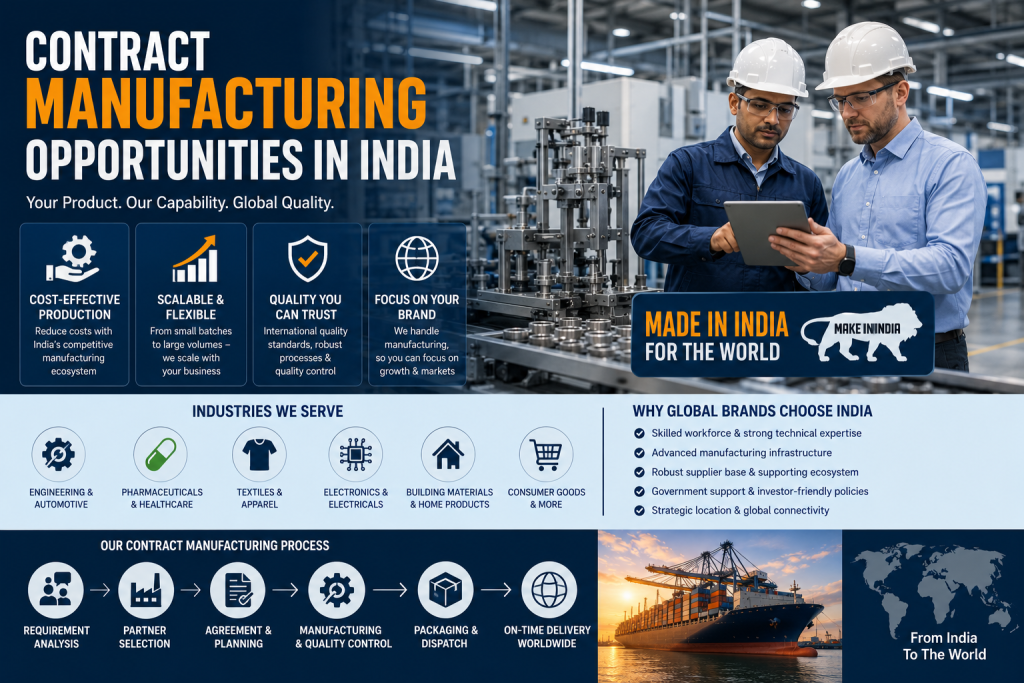
Many international companies are moving beyond traditional sourcing models and establishing contract manufacturing partnerships in India.
Under this approach, Indian manufacturers produce goods according to the buyer’s specifications, branding requirements, and quality standards.
Contract manufacturing can offer several advantages including lower capital investment, faster market entry, improved scalability, and access to specialized manufacturing expertise.
Industries such as engineering products, consumer goods, healthcare products, electronics, building materials, and industrial equipment have seen substantial growth in contract manufacturing arrangements.
For companies seeking a long-term presence in India, contract manufacturing often serves as a stepping stone toward broader supply chain integration and market expansion.
The Importance of Local Market Knowledge
Despite its enormous potential, India remains a complex and highly diverse market.
Supplier identification, due diligence, factory verification, compliance management, negotiations, logistics coordination, and quality assurance require local knowledge and on-ground expertise.
Many international buyers discover that working with a local sourcing and market-entry partner significantly reduces risk while accelerating supplier identification and onboarding.
Professional support can help buyers avoid costly mistakes, improve supplier selection, shorten procurement timelines, and establish more reliable sourcing operations.
How India Market Entry Supports Global Buyers
At India Market Entry, we help international companies identify, evaluate, and engage with reliable manufacturing partners across India.
Our team works closely with foreign businesses seeking to source products, establish contract manufacturing arrangements, diversify supply chains, or explore investment opportunities in India’s manufacturing sector.
Our services include supplier identification, factory audits, supplier verification, market research, business matchmaking, sourcing support, production monitoring, quality inspections, and trade delegation assistance.
Leveraging an extensive network of manufacturers, exporters, industry associations, chambers of commerce, and regional partners across India, we help global buyers navigate the complexities of the Indian market with confidence.
Whether you are sourcing industrial products, building materials, consumer goods, textiles, engineering components, or specialized manufacturing solutions, our objective is to help you identify reliable suppliers, reduce sourcing risks, and build sustainable long-term business relationships.
Conclusion
India’s rise as a global manufacturing and sourcing destination is no longer a future opportunity—it is a present reality. The country’s vast industrial ecosystem, competitive production capabilities, skilled workforce, and supportive policy environment make it one of the most attractive sourcing destinations for international businesses seeking resilient and diversified supply chains.
However, successful sourcing from India requires more than simply finding a supplier. It demands careful market research, supplier due diligence, quality management, and local expertise.
For companies looking to capitalize on India’s manufacturing strengths, the right local partner can make the difference between a successful sourcing program and a costly learning experience. With the right strategy and support, India offers global buyers access to one of the world’s most dynamic and rapidly expanding manufacturing ecosystems.
Need Help Sourcing from India?
Our team assists foreign companies with supplier search, factory audits, quality inspections, business matchmaking, and contract manufacturing partnerships across India. Get in touch to discuss your sourcing requirements and identify reliable Indian suppliers.