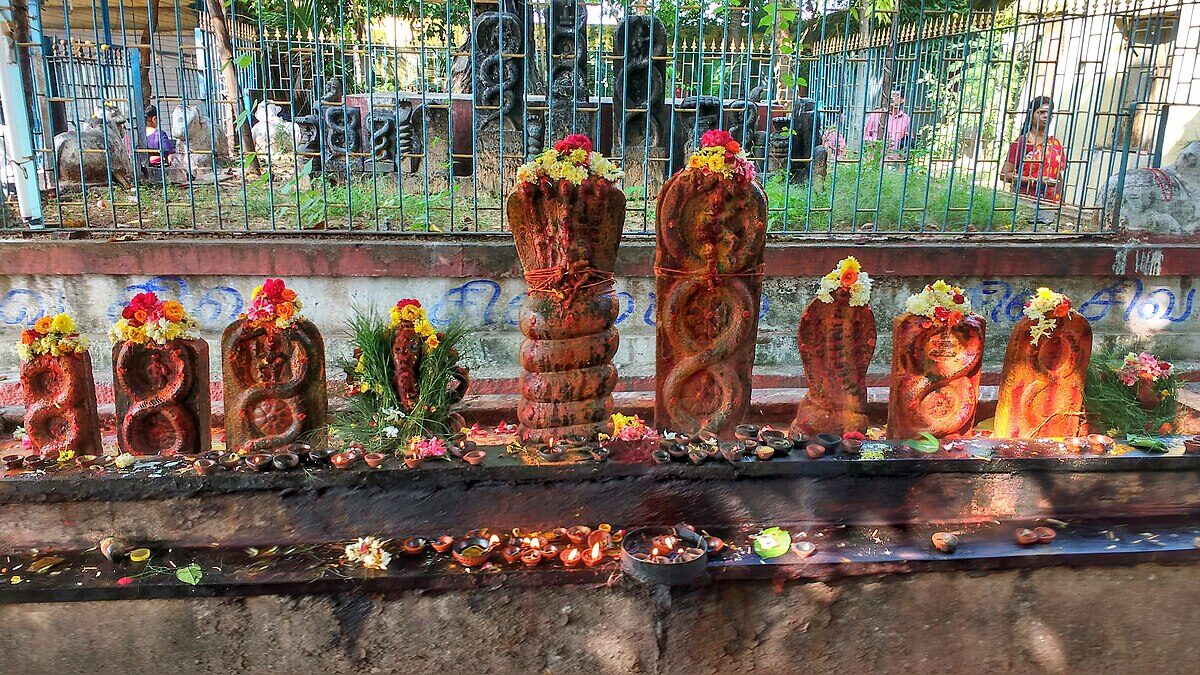
Each time you wander into the forested groves of Kerala during Ayilyam or Nag Panchami, a stillness wraps around you. These aren’t just religious ceremonies; they’re age-old dialogues between people and nature, played out through rituals that have withstood centuries.
A Tradition Rooted in Myth & Ecology
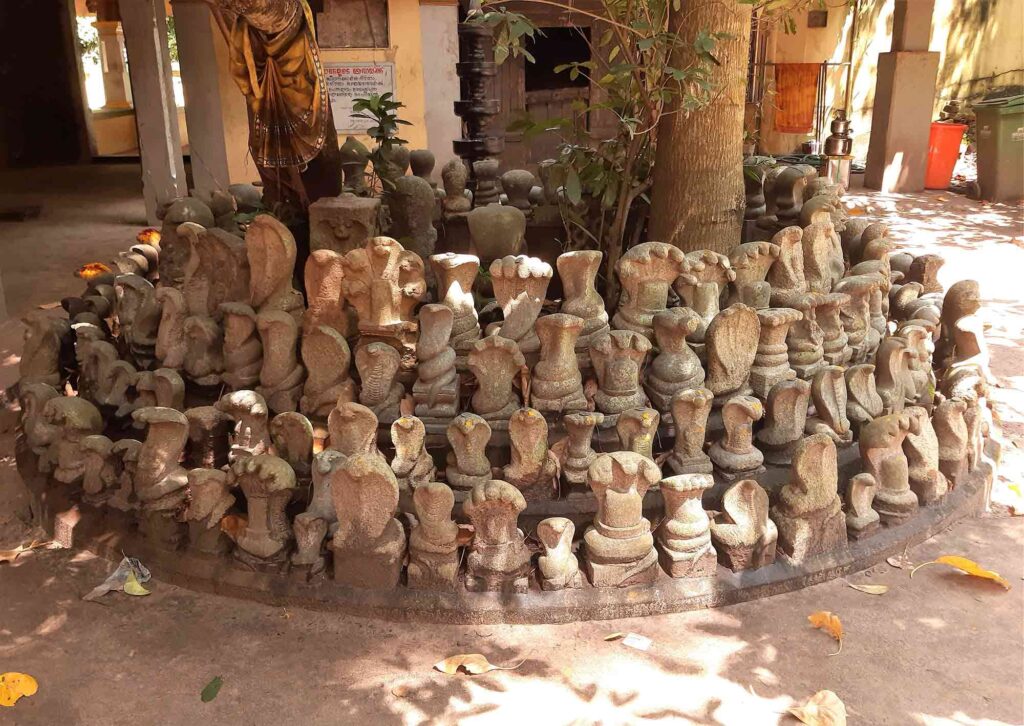
Snake worship in Kerala is deeply embedded in the region’s spiritual and ecological fabric. Many traditional homes still maintain sarpakavus—sacred serpent groves—protected forest patches where nature and divinity blend. These micro-ecosystems help conserve biodiversity, protect rare herbs, and serve as sanctuaries for serpents and spirits alike.
Rituals Etched in Nature
The festival includes mesmerizing rituals:
- Kalamezhuthu: Traditional floor art made with natural powders in intricate serpent forms.
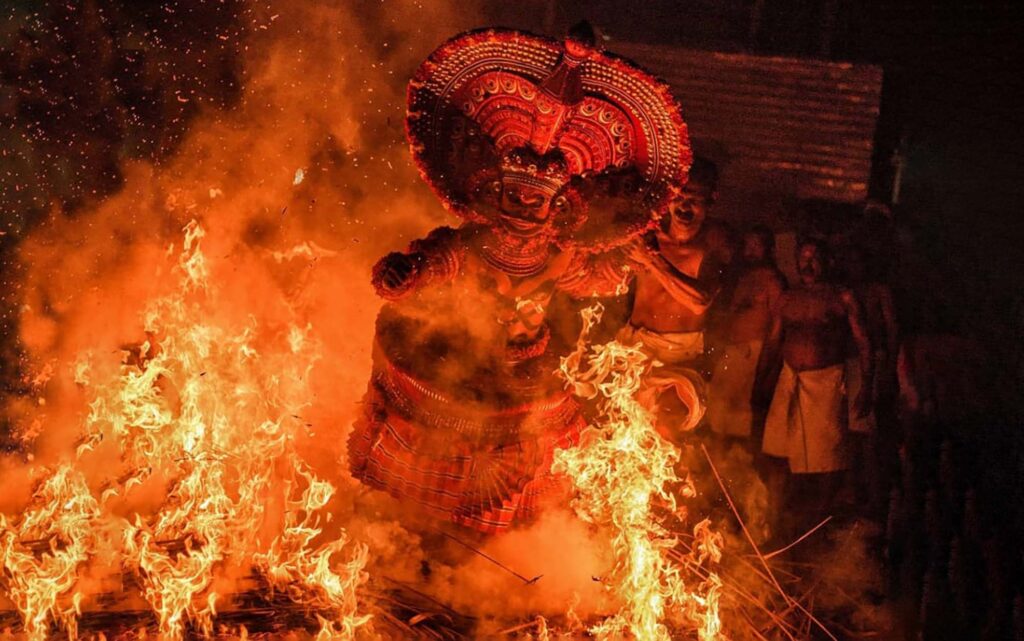
- Sarpam Thullal: A trance-like dance performed mostly by young girls to appease serpent deities.
- Pulluvan Pattu: Folk music sung by the Pulluvar community with stringed instruments dedicated to the Naga gods.
Mannarasala: The Heart of Serpent Worship
The Mannarasala Sree Nagaraja Temple is the crown jewel of Kerala’s snake worship. Tucked into the forests of Haripad, this temple houses more than 30,000 serpent idols. Devotees—especially childless couples—come to perform Uruli Kamazhthal, placing a metal pot upside-down in a sacred grove with hopes of fertility and blessings.
Ayilyam & Nag Panchami: Moments of Devotion
During Ayilyam (October–November), grand processions, oil baths for idols, and offerings of turmeric, milk, and flowers mark the day. Likewise, Nag Panchami (July–August) sees similar devotion pan-India, but Kerala’s version uniquely blends forest preservation and deep ancestral veneration.
Culture and Conservation Intertwined

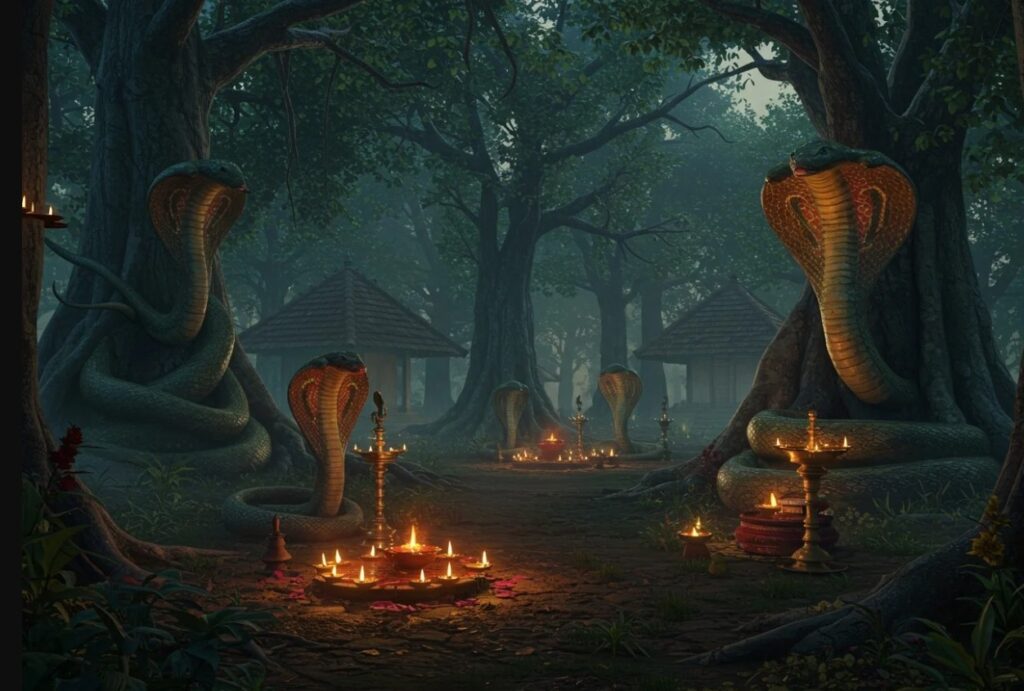
In many homes and temples, disturbing a sarpakavu is considered inauspicious. This cultural belief, while spiritual, also works as a natural conservation mechanism. It keeps flora and fauna intact and reaffirms human responsibility towards environmental harmony.
Final Thoughts
Kerala’s Sacred Snake Festival isn’t about fear or superstition—it’s about reverence. Reverence for a world where spirits dwell among trees, in the slither of a snake or the silence of a grove. It’s a timeless message that true divinity often resides in how we treat the world around us. And maybe, just maybe, a little bit of magic lives there too.
— Written by Team Filming Indo