A Practical Guide to Business Delegations & Market Visits in India

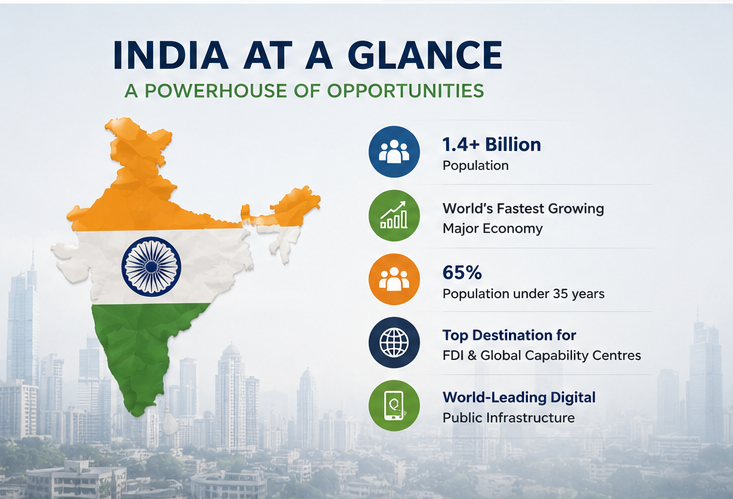
India has become one of the world’s most attractive destinations for international businesses seeking new markets, sourcing opportunities, investment prospects, strategic partnerships, and long-term growth.

As the world’s fifth-largest economy and one of the fastest-growing major markets, India offers opportunities across manufacturing, infrastructure, healthcare, technology, renewable energy, consumer goods, logistics, and professional services.

While market research and virtual meetings can provide valuable insights, nothing replaces the value of visiting the market in person. Business delegations and market visits allow companies to meet potential partners, evaluate opportunities firsthand, understand local business practices, and build relationships that often determine long-term success.

For many international companies, a well-planned business visit to India becomes the turning point between market exploration and actual market entry.


Why Business Delegations to India Are More Important Than Ever

India’s business environment is highly relationship-driven.

Although digital communication has made global business easier, personal meetings continue to play a significant role in building trust and establishing credibility.

Many Indian companies prefer to meet potential partners face-to-face before entering into meaningful commercial discussions.

A business delegation provides international companies with direct access to:

  • Potential customers
  • Distributors and agents
  • Manufacturers and suppliers
  • Government agencies
  • Industry associations
  • Investors
  • Strategic partners

Rather than relying solely on online research, companies can validate opportunities directly in the market.


What Is a Business Delegation?

A business delegation is a structured visit by a group of companies, industry representatives, investors, or business leaders to explore opportunities in a target market.

Delegations often include:

  • Business-to-business (B2B) meetings
  • Factory visits
  • Market visits
  • Industry briefings
  • Investment discussions
  • Government meetings
  • Trade fair participation
  • Networking events

Business delegations can be organized by trade associations, chambers of commerce, export promotion organizations, government agencies, industry groups, or private market-entry specialists.


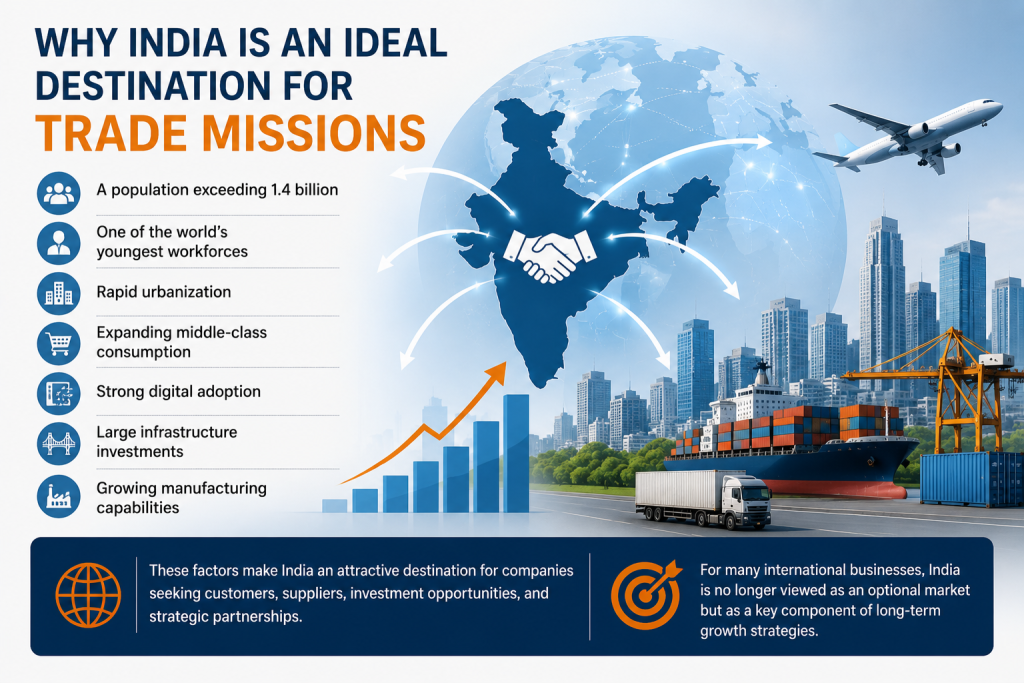
Why India Is an Ideal Destination for Trade Missions

India’s economic growth story continues to attract global attention.

The country offers:

  • A population exceeding 1.4 billion
  • One of the world’s youngest workforces
  • Rapid urbanization
  • Expanding middle-class consumption
  • Strong digital adoption
  • Large infrastructure investments
  • Growing manufacturing capabilities

These factors make India an attractive destination for companies seeking customers, suppliers, investment opportunities, and strategic partnerships.

For many international businesses, India is no longer viewed as an optional market but as a key component of long-term growth strategies.
Why India Is an Ideal Destination for Trade Missions

Key Objectives of a Business Visit to India

Every delegation has different goals, but most business visits focus on one or more of the following objectives.

Exploring Market Opportunities

A market visit allows companies to understand local demand, customer preferences, pricing structures, competitive dynamics, and industry trends.

Direct exposure to the market often reveals opportunities that cannot be identified through desk research alone.

Finding Business Partners

Many foreign companies enter India through:

  • Distributors
  • Dealers
  • Importers
  • Joint venture partners
  • Contract manufacturers
  • Strategic alliances

Meeting potential partners personally helps assess capabilities, credibility, and long-term compatibility.

Evaluating Suppliers and Manufacturers

For companies considering sourcing from India, factory visits are essential.

Site visits allow businesses to evaluate:

  • Production capabilities
  • Quality systems
  • Certifications
  • Workforce skills
  • Capacity levels
  • Compliance standards

This reduces sourcing risks and improves supplier selection decisions.

Understanding Regulatory Requirements

Business visits also provide opportunities to meet industry experts, advisors, and government stakeholders who can explain regulatory procedures and market-entry requirements.


How to Plan a Successful Trade Mission to India

The effectiveness of a delegation depends largely on preparation.

Define Clear Objectives

Companies should identify specific goals before traveling.

Examples include:

  • Finding distributors
  • Identifying sourcing partners
  • Exploring investments
  • Meeting government agencies
  • Attending trade exhibitions
  • Conducting market research

Clearly defined objectives help maximize the value of the visit.

Select the Right Cities

India is not a single market.

Different cities specialize in different industries.

For example:

  • Mumbai – Financial services, media, consumer goods
  • Bengaluru – Technology, startups, AI
  • Delhi NCR – Government relations, trade, services
  • Chennai – Automotive and manufacturing
  • Hyderabad – Pharmaceuticals and life sciences
  • Ahmedabad – Chemicals and engineering
  • Pune – Industrial manufacturing

Selecting the right locations is critical to achieving delegation objectives.

Schedule Meetings in Advance

One of the biggest mistakes international companies make is arriving without confirmed appointments.

Successful delegations typically arrange meetings several weeks in advance to ensure access to relevant stakeholders.


The Importance of B2B Matchmaking During Business Visits

A well-organized delegation should include structured B2B matchmaking.

Rather than relying on random networking opportunities, companies benefit from targeted introductions based on:

  • Industry sector
  • Business objectives
  • Investment interests
  • Product categories
  • Geographic priorities

Professional matchmaking significantly improves the quality of meetings and increases the likelihood of commercial outcomes.

Importance of B2B Matchmaking During Business Visits

Trade Shows and Industry Events as Part of Market Visits

India hosts thousands of trade fairs, exhibitions, industry conferences, and business events every year.

These events provide access to:

  • Buyers
  • Suppliers
  • Industry experts
  • Investors
  • Government representatives

Combining a market visit with participation in a relevant trade show often produces stronger results than either activity alone.

Many successful market-entry projects begin with a delegation visit centered around a major industry exhibition.


Common Challenges Faced by International Delegations

Although India offers substantial opportunities, international visitors often encounter practical challenges.

These may include:

  • Identifying the right companies
  • Coordinating meetings across cities
  • Managing travel logistics
  • Understanding local business culture
  • Language differences in certain regions
  • Verifying suppliers and partners
  • Following up after meetings

Without local support, these challenges can reduce the effectiveness of a business visit.


Why Local Delegation Support Makes a Difference

Professional delegation support helps companies maximize the return on their visit.

Local experts can assist with:

  • Market research
  • Meeting scheduling
  • B2B matchmaking
  • Partner identification
  • Factory visit coordination
  • Trade show planning
  • Translation support
  • Transportation logistics
  • Follow-up management

This ensures that companies spend more time developing business opportunities and less time managing operational details.


How India Market Entry Supports Business Delegations and Market Visits

At India Market Entry, we help international companies plan, organize, and execute successful business visits across India.

Our delegation support services include:

  • Market visit planning
  • Business matchmaking
  • Partner and distributor identification
  • Supplier search and verification
  • Trade mission organization
  • Trade fair support
  • Factory visit coordination
  • Government and industry meetings
  • Travel and logistics management
  • Follow-up support after the visit

Whether you are exploring India for the first time or conducting a targeted trade mission, our team helps ensure that every meeting, site visit, and business interaction contributes to your market-entry objectives.

By combining local market knowledge, extensive business networks, and practical on-ground support, we help international companies convert market visits into tangible business opportunities.


Final Thoughts

India offers enormous opportunities for international businesses, but successful market entry often begins with a well-planned visit.

Business delegations and market visits provide valuable insights, facilitate relationship building, accelerate partner identification, and reduce market-entry risks.

Companies that invest time in understanding the market firsthand are often better positioned to make informed decisions and establish successful long-term operations.

As India continues to emerge as one of the world’s most important business destinations, strategic business visits will remain one of the most effective ways for international companies to explore opportunities and build a strong presence in the market.

Top 10 Sectors for Foreign Companies Entering India in 2026

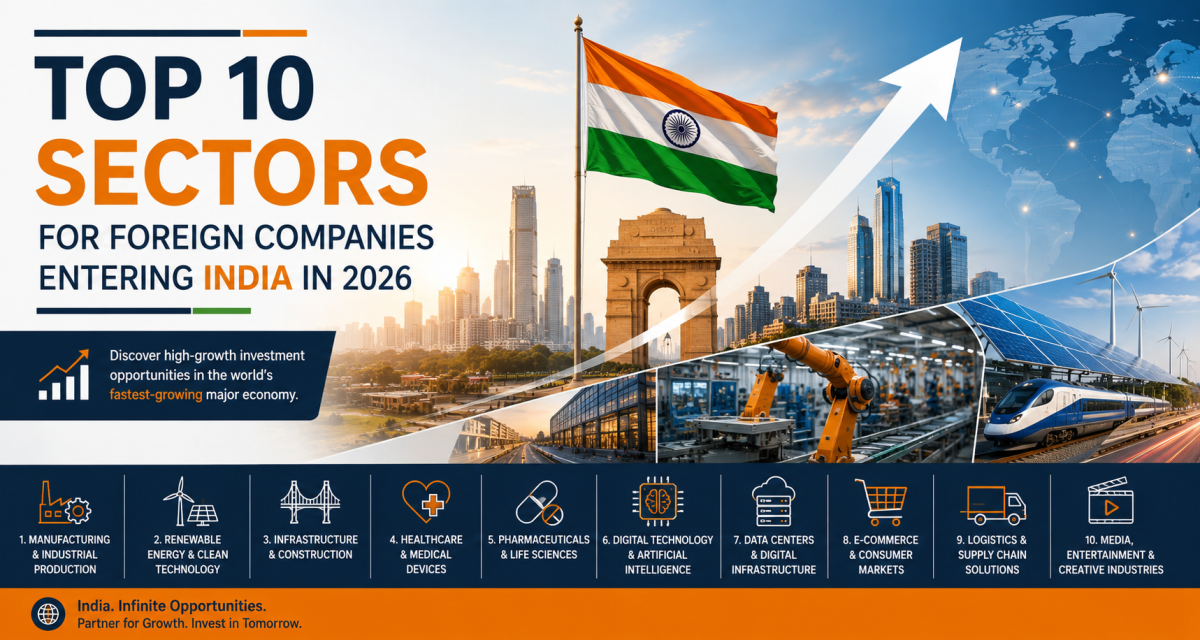
India has emerged as one of the world’s most attractive destinations for foreign investment. As the world’s fifth-largest economy with a GDP exceeding USD 4 trillion, India continues to outperform many major economies in terms of growth, consumption, infrastructure development, digital transformation, and industrial expansion.

The country’s large domestic market, favorable demographics, government-led reforms, improving business environment, and strong investment inflows have created significant opportunities for international companies across multiple industries.

For foreign businesses evaluating expansion into Asia, India is no longer simply a future opportunity—it is increasingly becoming a present-day strategic priority.

This article highlights the ten sectors expected to offer the strongest growth and investment opportunities for foreign companies entering India in 2026.


1. Manufacturing and Industrial Production

Manufacturing remains one of India’s highest-priority sectors.

Government initiatives such as Make in India, Production Linked Incentive (PLI) schemes, industrial corridor development, and logistics modernization are attracting global manufacturers across multiple industries.

Strong opportunities exist in:

  • Electronics
  • Automotive components
  • Engineering products
  • Industrial machinery
  • Chemicals
  • Consumer goods
  • Textiles

As companies diversify supply chains beyond China, India is increasingly benefiting from global manufacturing relocation strategies.

Foreign companies seeking contract manufacturing, supplier partnerships, or greenfield investments are finding growing opportunities across India’s industrial ecosystem.


2. Renewable Energy and Clean Technology

India has become one of the world’s fastest-growing renewable energy markets.

The country has set ambitious clean energy targets and continues investing heavily in solar, wind, battery storage, green hydrogen, and electric mobility infrastructure.

Investment opportunities exist in:

  • Solar equipment manufacturing
  • Energy storage systems
  • EV charging infrastructure
  • Green hydrogen projects
  • Smart grid technologies
  • Renewable energy services

As sustainability becomes a global priority, India’s clean energy sector is expected to attract substantial foreign capital over the coming decade.


3. Infrastructure and Construction

India is currently undertaking one of the largest infrastructure expansion programs in the world.

Government spending on roads, railways, airports, ports, industrial corridors, urban development, and logistics infrastructure continues to rise.

Opportunities are particularly strong in:

  • Engineering services
  • Construction technology
  • Building materials
  • Smart city solutions
  • Industrial parks
  • Logistics infrastructure

For global infrastructure companies, India offers a long-term growth market supported by significant public and private investment.


4. Healthcare and Medical Devices

India’s healthcare sector is undergoing rapid modernization.

Growing incomes, urbanization, healthcare awareness, and increased government spending are driving demand for hospitals, medical technologies, diagnostics, and healthcare services.

Foreign companies are finding opportunities in:

  • Medical devices
  • Healthcare technology
  • Diagnostics
  • Telemedicine
  • Hospital infrastructure
  • Specialty healthcare services

India’s healthcare market is expected to continue expanding significantly through 2030 and beyond.


5. Pharmaceuticals and Life Sciences

India is already one of the world’s leading pharmaceutical manufacturing hubs and a major supplier of generic medicines globally.

The country possesses strong capabilities in:

  • Active Pharmaceutical Ingredients (APIs)
  • Generic drugs
  • Contract manufacturing
  • Biotechnology
  • Clinical research

Government support and increasing global demand for healthcare products continue to strengthen investment opportunities in this sector.


6. Digital Technology and Artificial Intelligence

India’s digital economy has become one of the fastest-growing globally.

The country’s large technology talent pool, thriving startup ecosystem, and increasing enterprise digitalization are driving growth in:

  • Artificial Intelligence
  • Software development
  • Cloud computing
  • Cybersecurity
  • SaaS solutions
  • Data analytics
  • Enterprise technology services

Global technology companies continue expanding operations in India to access both talent and market opportunities.


7. Data Centers and Digital Infrastructure

Rapid digital adoption is fueling demand for data centers and digital infrastructure.

Growth in cloud computing, AI applications, OTT platforms, e-commerce, fintech, and enterprise software is creating significant investment requirements.

Opportunities include:

  • Data center development
  • Cloud infrastructure
  • Network equipment
  • Fiber connectivity
  • Digital infrastructure services

India is expected to become one of Asia’s largest data center markets over the next decade.


8. E-Commerce and Consumer Markets

India’s consumer market remains one of the country’s biggest attractions for foreign investors.

A growing middle class, rising disposable incomes, increasing internet penetration, and changing consumer preferences continue to drive demand.

Opportunities exist across:

  • Retail
  • E-commerce
  • Consumer electronics
  • Personal care products
  • Food and beverages
  • Home improvement products

Companies entering India today gain access to one of the world’s largest consumer bases.


9. Logistics and Supply Chain Solutions

India’s logistics sector is undergoing significant transformation.

Government initiatives such as PM Gati Shakti, Dedicated Freight Corridors, Bharatmala, Sagarmala, and the National Logistics Policy are improving efficiency and reducing transportation costs.

Opportunities exist in:

  • Warehousing
  • Cold chain solutions
  • Supply chain technology
  • Freight services
  • Last-mile delivery
  • Logistics automation

As manufacturing and e-commerce continue to grow, demand for modern logistics solutions is expected to increase substantially.


10. Media, Entertainment and Creative Industries

India’s media and entertainment industry has expanded far beyond traditional film and television.

Today, growth is being driven by:

  • Streaming platforms
  • Digital content production
  • Gaming
  • Animation
  • Visual effects
  • Advertising
  • Creator economy businesses

International production companies, broadcasters, content platforms, and creative businesses increasingly view India as both a production hub and a major consumer market.

The combination of skilled talent, competitive production costs, and a large digital audience creates significant opportunities for foreign investment.


Why India Continues to Attract Global Investment

Several structural advantages continue to strengthen India’s attractiveness for international businesses.

These include:

  • A population exceeding 1.4 billion
  • One of the world’s youngest workforces
  • Strong economic growth
  • Expanding middle-class consumption
  • Increasing infrastructure investment
  • Government support for foreign investment
  • Improving ease of doing business
  • Rapid digital transformation

Together, these factors make India one of the most compelling long-term investment destinations globally.


How India Market Entry Helps Foreign Companies Enter India

While the opportunities are substantial, entering India successfully requires local knowledge, market intelligence, and reliable business networks.

At India Market Entry, we help international companies identify opportunities, evaluate sectors, connect with potential partners, and navigate the Indian market efficiently.

Our services include:

  • Market research and opportunity assessment
  • Partner and distributor search
  • Business matchmaking
  • Representation services
  • Investment support
  • Trade mission coordination
  • Business visit planning
  • Sector-specific market intelligence

Whether you are evaluating manufacturing, infrastructure, technology, healthcare, renewable energy, consumer markets, or other growth sectors, our team helps accelerate your market-entry journey and reduce business risks.

How India market entry helps companies

Final Thoughts

India’s economic transformation is creating opportunities across a wide range of industries. For foreign companies looking beyond mature markets and seeking long-term growth, few countries can match India’s combination of market size, economic momentum, talent availability, and investment potential.

The most successful companies will be those that identify opportunities early, establish local relationships, and build a clear market-entry strategy.

As India continues its rise as a global economic powerhouse, the sectors highlighted above are expected to remain among the most attractive destinations for foreign investment in 2026 and beyond.

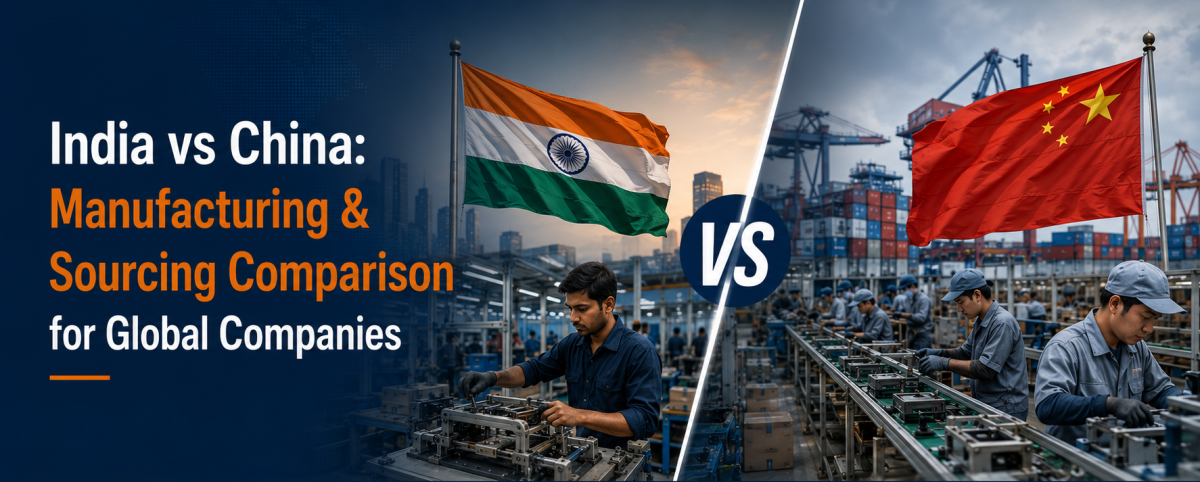
India vs China: Manufacturing & Sourcing Comparison for Global Companies

For more than three decades, China has been the world’s manufacturing powerhouse. Its extensive industrial ecosystem, large-scale production capabilities, advanced infrastructure, and export-oriented economy transformed the country into the preferred sourcing destination for global companies.

However, the global manufacturing landscape is changing.

Rising labor costs in China, geopolitical tensions, supply chain disruptions, trade restrictions, and increasing demand for supply chain diversification have prompted multinational companies to explore alternative manufacturing destinations.

As a result, India has emerged as one of the most promising sourcing and manufacturing alternatives to China.

Today, many global businesses are adopting a “China Plus One” strategy, maintaining operations in China while expanding sourcing and manufacturing activities into countries such as India, Vietnam, Mexico, and Indonesia.

Among these alternatives, India stands out because of its large workforce, expanding manufacturing base, government incentives, growing domestic market, and long-term economic potential.

This article compares India and China across key manufacturing and sourcing factors to help global companies make informed supply chain decisions.


Why Global Companies Are Looking for Sourcing Alternatives to China

The shift away from exclusive dependence on China is being driven by multiple factors.

Average manufacturing wages in China have increased significantly over the past decade, reducing some of the cost advantages that originally attracted global manufacturers.

At the same time, trade tensions between major economies, particularly the United States and China, have increased uncertainty for international supply chains.

The COVID-19 pandemic further exposed the risks of concentrating production in a single country, leading many businesses to rethink sourcing strategies and improve supply chain resilience.

As a result, companies across industries including electronics, machinery, consumer products, automotive components, textiles, healthcare, and industrial goods are actively evaluating alternative sourcing destinations.


India vs China Manufacturing: Labor Costs and Workforce Availability

Labor costs remain one of the most important considerations for manufacturers.

China’s manufacturing workforce has become increasingly skilled, but labor costs have risen substantially as the country’s economy has matured.

India, by comparison, continues to offer a significant labor cost advantage in many manufacturing sectors.

India also benefits from one of the world’s youngest populations, with a median age of approximately 29 years compared to China’s aging workforce.

Every year, millions of young workers enter India’s labor market, creating a large talent pool for manufacturing industries.

For labor-intensive industries such as textiles, apparel, footwear, furniture, consumer goods, and assembly operations, India offers attractive cost advantages.

Advantage: India


India vs China Manufacturing Infrastructure Comparison

Infrastructure has traditionally been one of China’s strongest competitive advantages.

China possesses highly developed ports, highways, industrial parks, rail networks, and logistics systems that support large-scale manufacturing and exports.

India has historically lagged behind in this area, but significant investments are rapidly narrowing the gap.

Government initiatives such as PM Gati Shakti, Bharatmala, Dedicated Freight Corridors, Industrial Corridors, Sagarmala, and National Logistics Policy are transforming India’s infrastructure landscape.

India is investing billions of dollars annually in roads, ports, airports, logistics hubs, and industrial parks to improve manufacturing competitiveness.

While China still maintains an advantage in infrastructure maturity, India’s progress is creating increasingly attractive conditions for global manufacturers.

Advantage: China (currently), India (rapidly improving)


Supply Chain Ecosystem: India vs China Manufacturing Capabilities

China’s biggest strength remains its manufacturing ecosystem.

In many industries, suppliers, component manufacturers, assembly facilities, logistics providers, and exporters operate within tightly integrated industrial clusters.

This creates significant efficiency advantages.

India’s manufacturing ecosystem is expanding rapidly but remains less integrated than China’s in certain sectors.

However, India has developed strong capabilities in:

  • Pharmaceuticals
  • Automotive components
  • Chemicals
  • Engineering goods
  • Textiles and apparel
  • Electronics assembly
  • Renewable energy equipment
  • Industrial machinery

As more global companies establish operations in India, supplier networks continue to strengthen.

Advantage: China


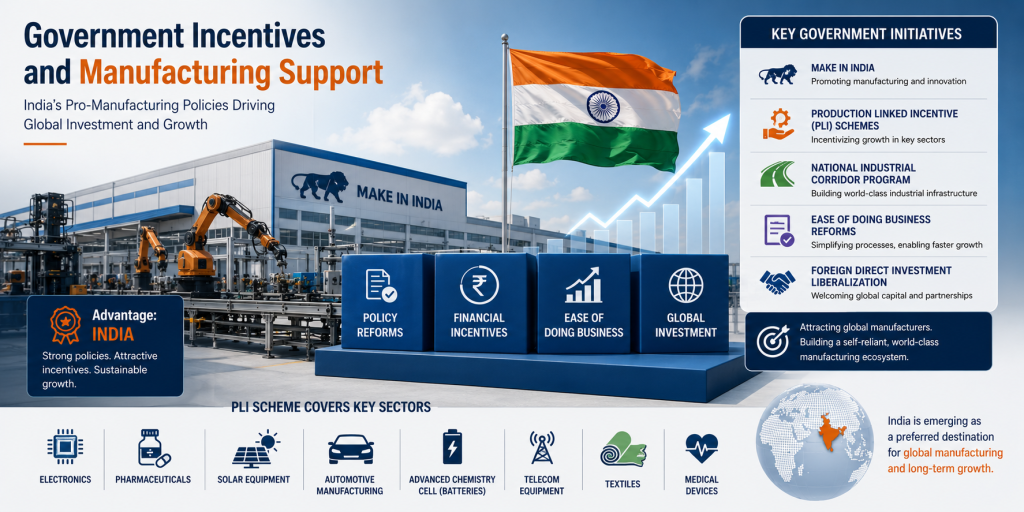
Government Incentives and Manufacturing Support

India has introduced aggressive policies to attract global manufacturers.

Programs such as:

  • Make in India
  • Production Linked Incentive (PLI) Schemes
  • National Industrial Corridor Program
  • Ease of Doing Business Reforms
  • Foreign Direct Investment Liberalization

have significantly improved India’s attractiveness for international investors.

The Production Linked Incentive (PLI) scheme alone covers multiple sectors including electronics, pharmaceuticals, solar equipment, automotive manufacturing, batteries, telecom equipment, textiles, and medical devices.

These incentives are encouraging both foreign investment and domestic manufacturing expansion.

China continues to provide support for manufacturing industries, but India’s incentive programs are increasingly attracting global attention.

Advantage: India

Government Incentives and Manufacturing Support

Domestic Market Potential: India vs China

For many manufacturers, production decisions are increasingly linked to local market opportunities.

China remains one of the world’s largest consumer markets, but economic growth has moderated in recent years.

India, on the other hand, is expected to remain one of the fastest-growing major economies globally.

With a population exceeding 1.4 billion and a rapidly expanding middle class, India offers manufacturers the dual advantage of serving both export markets and domestic consumers.

Many international companies now view India not only as a sourcing destination but also as a strategic long-term growth market.

Advantage: India (future growth potential)


Geopolitical Risk and Supply Chain Resilience

Geopolitical risk has become a major factor in sourcing decisions.

Companies increasingly seek diversified supply chains to reduce exposure to trade disputes, tariffs, sanctions, political tensions, and unexpected disruptions.

India is generally viewed as a stable and strategically important partner for many global economies.

The country’s strong diplomatic relationships and growing integration with international supply chains make it an attractive location for supply chain diversification.

For companies implementing a China Plus One strategy, India often becomes a preferred secondary manufacturing base.

Advantage: India


Ease of Doing Business: India vs China

Both countries have undertaken significant reforms to improve business environments.

China benefits from decades of manufacturing experience and highly efficient industrial zones.

India has made substantial progress in simplifying regulations, digitizing government services, improving customs procedures, and streamlining investment processes.

Although administrative processes can still vary across Indian states, the overall business environment has improved significantly.

Many global investors now report much smoother market entry experiences compared with previous decades.

Advantage: China (current execution), India (improving rapidly)


Which Industries Should Consider India as a China Alternative?

India is particularly attractive for companies involved in:

  • Textiles and apparel
  • Pharmaceuticals
  • Medical devices
  • Engineering products
  • Automotive components
  • Chemicals
  • Building materials
  • Renewable energy equipment
  • Electronics assembly
  • Consumer goods

These sectors benefit from India’s labor availability, government incentives, growing supplier base, and export competitiveness.


Why Global Companies Are Adopting a China Plus One Strategy

The reality is that most multinational companies are not completely replacing China.

Instead, they are diversifying.

A China Plus One strategy allows companies to maintain access to China’s established manufacturing ecosystem while simultaneously building additional capacity in alternative locations such as India.

This approach helps:

  • Reduce supply chain risk
  • Improve business continuity
  • Increase sourcing flexibility
  • Access new markets
  • Optimize manufacturing costs

For many businesses, India has become the preferred destination for implementing this strategy.


How India Market Entry Helps Global Companies Source from India

Successfully sourcing from India requires more than identifying suppliers online.

Finding reliable manufacturers, conducting due diligence, assessing production capabilities, managing supplier relationships, and understanding local business practices are critical to long-term success.

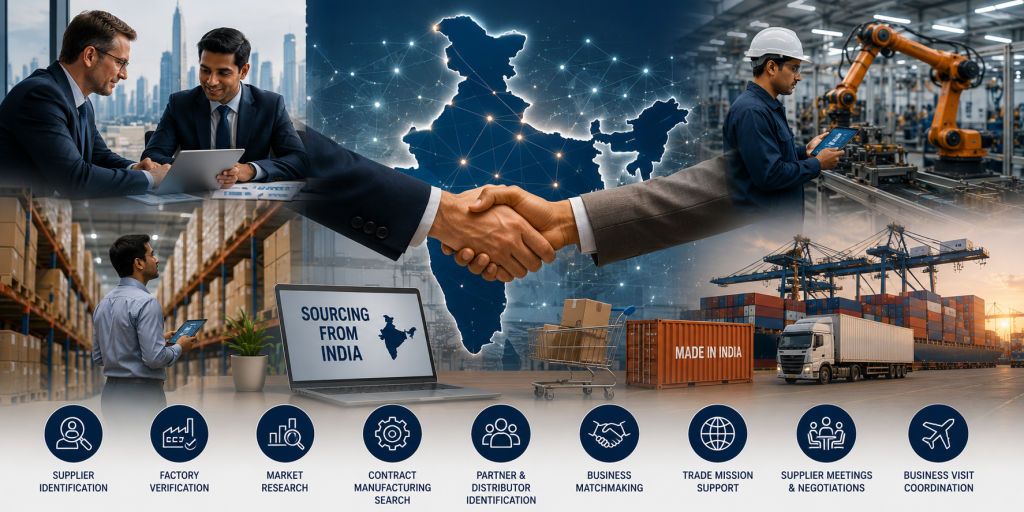
At India Market Entry, we help international companies identify sourcing opportunities and establish reliable supplier networks across India.

Our services include:

  • Supplier identification
  • Factory verification
  • Market research
  • Contract manufacturing search
  • Partner and distributor identification
  • Business matchmaking
  • Trade mission support
  • Supplier meetings and negotiations
  • Business visit coordination

Whether you are exploring India as a sourcing destination or implementing a China Plus One strategy, our team helps you navigate the market and connect with trusted manufacturing partners.

How India Market Entry Helps Global Companies Source from India

Final Thoughts

China remains one of the world’s most important manufacturing economies, with unmatched industrial depth and mature supply chains.

However, the global sourcing landscape is evolving.

India’s competitive labor costs, large workforce, strong economic growth, government incentives, expanding infrastructure, and growing manufacturing ecosystem have positioned the country as one of the most attractive sourcing alternatives to China.

For global companies seeking resilience, diversification, and long-term growth opportunities, the question is no longer whether India should be part of the supply chain strategy—it is how quickly they can establish a meaningful presence in one of the world’s fastest-growing manufacturing destinations.

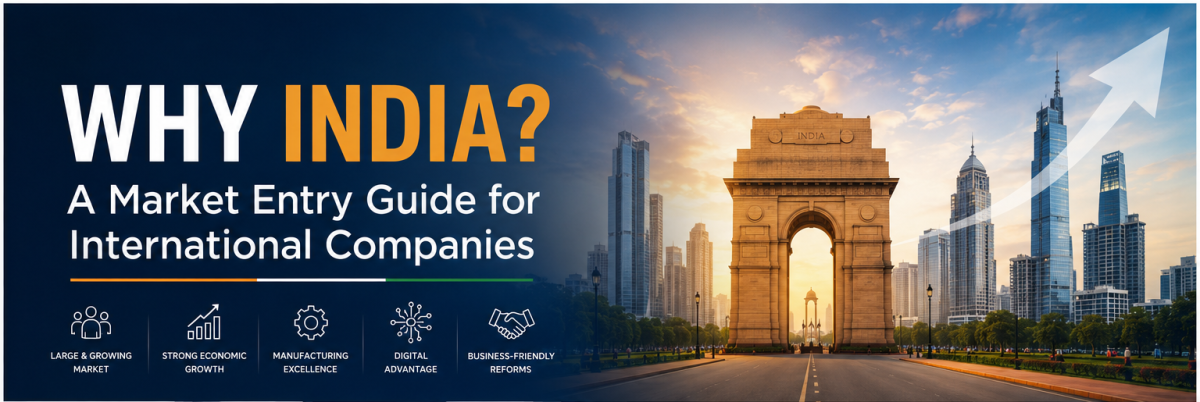
Why India? A Strategic Market Entry Guide for International Companies in 2026

Introduction: Why Global Companies Are Looking at India

As multinational corporations reassess their global expansion strategies, India has emerged as one of the most attractive destinations for investment, manufacturing, sourcing, and business growth. With a population exceeding 1.4 billion people, a GDP of more than US$4 trillion, and a rapidly growing consumer base, India offers international businesses a unique combination of market scale, skilled talent, and economic resilience.

Whether you are a technology company, manufacturer, retailer, service provider, or investor, entering the India market presents significant opportunities for long-term growth and profitability.

India Market Entry: A Growing Economic Powerhouse

India continues to be one of the world’s fastest-growing major economies. Strong domestic consumption, infrastructure investments, manufacturing expansion, and digital transformation have positioned the country as a preferred destination for foreign businesses.

Foreign Direct Investment (FDI) inflows reached approximately US$81 billion in FY 2024-25, while cumulative FDI inflows since 2000 have crossed US$1.14 trillion. These figures demonstrate growing confidence among international investors and global corporations in India’s long-term economic prospects.

For companies considering India market entry, the country’s stable economic outlook and large domestic market provide a strong foundation for expansion.

Why Doing Business in India Makes Strategic Sense

Access to One of the World’s Largest Consumer Markets

India is home to one of the largest and youngest consumer markets globally. Rising incomes, urbanisation, and growing digital connectivity are driving demand across multiple sectors, including consumer goods, healthcare, education, financial services, retail, travel, and technology.

By 2030, India is expected to become one of the world’s leading consumption-driven economies, creating significant opportunities for international brands seeking new customers and revenue streams.

Strategic Location for Global Business

India’s geographical position provides access to key international markets across Asia, the Middle East, Africa, and Europe. Many multinational companies use India as a regional hub for operations, sourcing, manufacturing, and exports.

This strategic location allows businesses to efficiently serve both domestic and international markets from a single base.

Entering India Market Through Manufacturing and Supply Chain Expansion

Global supply chains are undergoing a major transformation, with many companies adopting a “China Plus One” strategy to diversify manufacturing operations.

India has emerged as a leading beneficiary of this shift. Through initiatives such as Make in India and Production Linked Incentive (PLI) schemes, the Government of India has encouraged investments in sectors such as:

  • Electronics Manufacturing
  • Semiconductors
  • Automotive and EVs
  • Renewable Energy
  • Pharmaceuticals
  • Medical Devices
  • Telecom Equipment

More than 836 manufacturing projects have been approved under various PLI schemes, attracting investments exceeding US$25 billion and generating manufacturing output valued at over US$235 billion.

For foreign manufacturers, India offers a combination of competitive costs, skilled labour, government incentives, and access to a large domestic market.

India’s Skilled Workforce: A Key Advantage for International Companies

One of India’s greatest strengths is its vast talent pool. Every year, the country produces millions of graduates in engineering, information technology, finance, management, healthcare, and scientific research.

This has led many global corporations to establish:

  • Global Capability Centres (GCCs)
  • Research & Development Facilities
  • Shared Service Centres
  • Technology Development Hubs

Cities such as Bengaluru, Hyderabad, Pune, Chennai, Mumbai, and Delhi NCR have become globally recognised innovation centres, attracting investments from leading multinational companies.

Digital India: Transforming the Business Environment

India’s digital revolution has fundamentally changed the way businesses operate.

The country has built one of the world’s most advanced digital public infrastructures through initiatives such as:

  • Aadhaar Digital Identity
  • Unified Payments Interface (UPI)
  • DigiLocker
  • Digital India Programme

UPI alone processes billions of transactions every month, making India the world’s largest real-time digital payments market.

For international businesses, this digital ecosystem simplifies customer onboarding, payments, compliance, and business operations, enabling faster market penetration and scalability.

Setting Up Business in India: Popular Market Entry Options

Foreign companies have several options when entering India:

Wholly Owned Subsidiary

The most common structure for long-term investments, providing complete ownership and operational control.

Joint Venture

Suitable for companies seeking local expertise, established distribution networks, and market knowledge.

Liaison Office

Ideal for market research, relationship building, and exploring opportunities before making substantial investments.

Branch Office

Allows foreign companies to undertake approved business activities in India while maintaining direct control.

Distribution and Strategic Partnerships

A cost-effective approach for companies testing market potential before establishing a physical presence.

Challenges of Doing Business in India

While India offers significant opportunities, successful market entry requires careful planning.

Common challenges include:

  • Regulatory compliance requirements
  • Diverse regional markets
  • Complex distribution networks
  • Localisation of products and services
  • Talent acquisition and retention

Companies that invest in market research, compliance planning, and local partnerships generally achieve better long-term results.

why-india-market-entry-guide-for-international-companies

Foreign Investment in India: Sectors with High Growth Potential

Several sectors are attracting significant international investment:

Technology and Artificial Intelligence

India’s growing digital economy continues to create opportunities in software, AI, cloud computing, cybersecurity, and fintech.

Renewable Energy

Government targets for clean energy are driving investments in solar, wind, battery storage, and green hydrogen projects.

Healthcare and Pharmaceuticals

India remains one of the world’s leading pharmaceutical manufacturing hubs and a rapidly expanding healthcare market.

Infrastructure and Construction

Major investments in highways, railways, airports, logistics parks, and smart cities continue to generate opportunities for foreign investors.

Electronics and Semiconductor Manufacturing

Government incentives and growing domestic demand are positioning India as a global electronics manufacturing destination.

Conclusion: Why International Companies Should Enter India Now

India’s combination of economic growth, market size, skilled workforce, digital infrastructure, and investor-friendly reforms makes it one of the most attractive destinations for international expansion.

For businesses evaluating India market entry opportunities, the country offers far more than a large consumer market. It provides a strategic platform for manufacturing, innovation, sourcing, technology development, and regional expansion.

Companies that establish a strong presence today will be well-positioned to benefit from India’s continued transformation into one of the world’s leading economic powers over the coming decades.