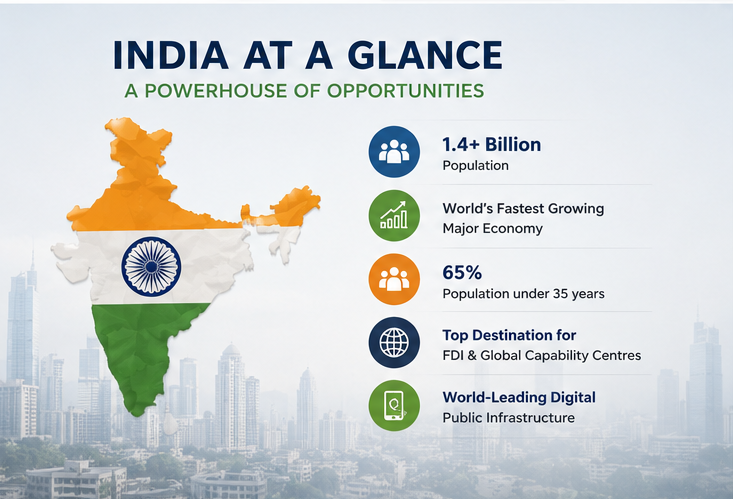
India has become one of the world’s most attractive destinations for international businesses seeking growth, manufacturing diversification, sourcing opportunities, and access to a rapidly expanding consumer market. As the world’s fifth-largest economy, India recorded a GDP exceeding USD 4 trillion and continues to rank among the fastest-growing major economies globally.
For foreign companies looking to enter India, finding reliable business partners is often the single most important factor determining market success. Whether the objective is to appoint distributors in India, identify qualified suppliers, establish a sourcing office, or develop a strategic joint venture, selecting the right local partner can significantly reduce market entry risks and accelerate growth.
However, India’s vast geography, diverse business environment, and fragmented distribution networks make partner identification more complex than in many developed markets. This guide provides a structured approach for foreign companies seeking trusted business partners in India.
Why Finding the Right Business Partners in India Matters
India’s market potential is substantial. With a population exceeding 1.4 billion people and a rapidly growing middle class, the country offers significant opportunities across manufacturing, technology, healthcare, infrastructure, renewable energy, consumer products, food processing, and industrial equipment.
India’s merchandise exports have crossed USD 430 billion annually, while services exports have exceeded USD 380 billion, demonstrating the country’s growing integration into global supply chains.
Despite these opportunities, foreign companies often face challenges including:
- Limited visibility of reliable local companies
- Regional differences in business practices
- Complex distribution channels
- Supplier verification concerns
- Regulatory and compliance requirements
- Cultural and communication gaps
An experienced and trustworthy local partner can help navigate these challenges effectively.
Understanding the Different Types of Business Partners in India
Before beginning a partner search, foreign companies should clearly identify the type of partnership required.
Distributors in India
Distributors purchase products and resell them through established networks.
This model is particularly common in:
- Industrial machinery
- Medical equipment
- Consumer goods
- Chemicals
- Building materials
- Electronics
Appointing the right distributor can provide immediate access to customers without the need to establish a local office.
Suppliers and Contract Manufacturers
India has emerged as a major global sourcing destination under the China+1 strategy.
Key sourcing sectors include:
- Engineering products
- Automotive components
- Textiles and garments
- Pharmaceuticals
- Chemicals
- Packaging materials
- Renewable energy components
- Electronics manufacturing
A professional supplier search in India can help foreign companies identify qualified manufacturers that meet international quality standards.
Joint Venture Partners
Joint ventures remain popular in sectors requiring local expertise, manufacturing facilities, technology transfer, or large-scale investments.
Potential benefits include:
- Faster market entry
- Shared investment risk
- Local market knowledge
- Regulatory support
- Established customer relationships
Sales Representatives and Agents
Companies entering India for the first time often appoint local representatives to test market demand before making larger investments.
This model allows businesses to evaluate opportunities with relatively low financial commitment.
India’s Regional Markets Require Different Partnership Strategies
One of the most common mistakes foreign companies make is viewing India as a single market.
In reality, India consists of multiple regional markets with distinct consumer preferences, languages, and distribution structures.
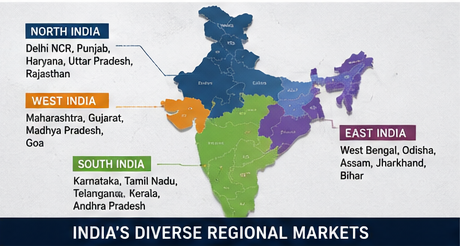
Northern India
Major business hubs include:
- Delhi NCR
- Chandigarh
- Jaipur
- Lucknow
Strong sectors:
- Infrastructure
- Construction
- Government procurement
- Consumer goods
Western India
Key commercial centers:
- Mumbai
- Pune
- Ahmedabad
- Surat
Strong sectors:
- Financial services
- Manufacturing
- Chemicals
- Pharmaceuticals
- Engineering
Southern India
Major hubs:
- Bengaluru
- Chennai
- Hyderabad
- Kochi
Strong sectors:
- Technology
- Electronics
- Aerospace
- Automotive
- Healthcare
Eastern India
Key cities:
- Kolkata
- Bhubaneswar
- Guwahati
Strong sectors:
- Mining
- Logistics
- Infrastructure
- Agriculture
Understanding regional strengths helps foreign companies identify partners with the appropriate geographic reach and industry expertise.
How to Find Reliable Distributors in India

Participate in Industry Trade Shows
India hosts hundreds of international trade exhibitions every year across sectors including manufacturing, healthcare, construction, food processing, textiles, electronics, and renewable energy.
Trade shows provide opportunities to:
- Meet distributors face-to-face
- Evaluate competitors
- Understand market demand
- Build direct relationships
Face-to-face interaction remains one of the most effective methods of identifying serious business partners.
Engage Business Matchmaking Services
Professional business matchmaking services help foreign companies:
- Identify potential distributors
- Screen suppliers
- Arrange B2B meetings
- Verify credentials
- Conduct market assessments
This significantly reduces the time and resources required to identify suitable partners.
Work with Industry Associations
Industry associations often maintain extensive member databases and can assist with partner identification.
These organizations can provide valuable insights into market reputation and industry standing.
Supplier Search India: Conducting Effective Due Diligence
Identifying potential suppliers is only the first step. Comprehensive verification is essential before entering into commercial agreements.
Verify Legal Registration
Confirm:
- Company incorporation status
- Ownership structure
- GST registration
- Export licenses where applicable
Assess Financial Stability
Review:
- Financial statements
- Banking relationships
- Credit reports
- Trade references
Financially stable suppliers are better positioned to support long-term business relationships.
Evaluate Production Capacity
Verify:
- Manufacturing capabilities
- Production capacity
- Technology standards
- Workforce strength
- Quality management systems
Factory visits are strongly recommended before finalizing supplier agreements.
Review International Certifications
Many export-oriented Indian manufacturers hold certifications such as:
- ISO 9001
- ISO 14001
- CE Certification
- FDA Compliance
- GMP Certification
- IATF Automotive Standards
These certifications provide additional confidence regarding quality and compliance standards.
Red Flags Foreign Companies Should Watch For
While India offers numerous credible business opportunities, caution is essential when evaluating potential partners.
Warning signs may include:
- Unrealistic sales projections
- Reluctance to share references
- Lack of physical infrastructure
- Requests for immediate exclusivity
- Poor communication standards
- Frequent management changes
- Limited industry experience
Proper due diligence helps avoid costly mistakes and partnership failures.
Why Business Matchmaking Services Improve Success Rates
Many foreign companies underestimate the complexity of finding suitable business partners in India.
Professional matchmaking services can provide:
Pre-Qualified Partner Identification
Potential partners are screened based on:
- Industry experience
- Financial capability
- Market presence
- Technical expertise
Business Verification
Verification typically includes:
- Company background checks
- Market reputation assessment
- Operational reviews
- Reference checks
B2B Meeting Coordination
Qualified meetings save significant time and ensure discussions take place with decision-makers rather than intermediaries.
Ongoing Market Support
Support may include:
- Market intelligence
- Partner negotiations
- Follow-up coordination
- Market expansion strategies
Building Long-Term Business Relationships in India
Business success in India often depends on relationship-building rather than transactional interactions alone.
Foreign companies that achieve long-term success typically:
- Visit India regularly
- Maintain direct communication
- Invest in partner training
- Provide marketing support
- Establish realistic growth targets
- Build trust over time
Strong relationships frequently evolve into strategic partnerships that support expansion across multiple regions and sectors.
Business Partner Selection Checklist for Foreign Companies
Before appointing a distributor, supplier, or strategic partner in India, ensure that the company has:
✔ Verified legal registration
✔ Strong financial standing
✔ Relevant industry experience
✔ Established customer references
✔ Adequate infrastructure and resources
✔ Transparent communication practices
✔ Proven market reputation
✔ Clear growth strategy
✔ Ability to support long-term business objectives
India’s growing economy, expanding manufacturing base, and increasing integration into global supply chains make it one of the most attractive destinations for international business expansion.
However, market success often depends on identifying reliable business partners in India who possess the expertise, infrastructure, financial capability, and market reach required to support long-term growth.
Whether seeking distributors in India, conducting a supplier search, establishing sourcing operations, or exploring strategic alliances, a structured approach that combines market research, due diligence, and professional business matchmaking can significantly improve outcomes and reduce market entry risks.
For foreign companies planning expansion into India, investing time and resources in partner identification is not merely a preliminary step—it is a critical strategic decision that can determine long-term success in one of the world’s most dynamic markets.