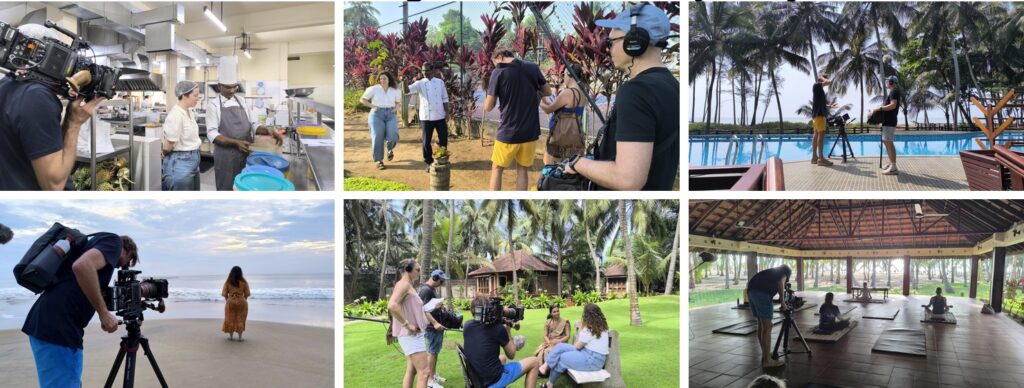
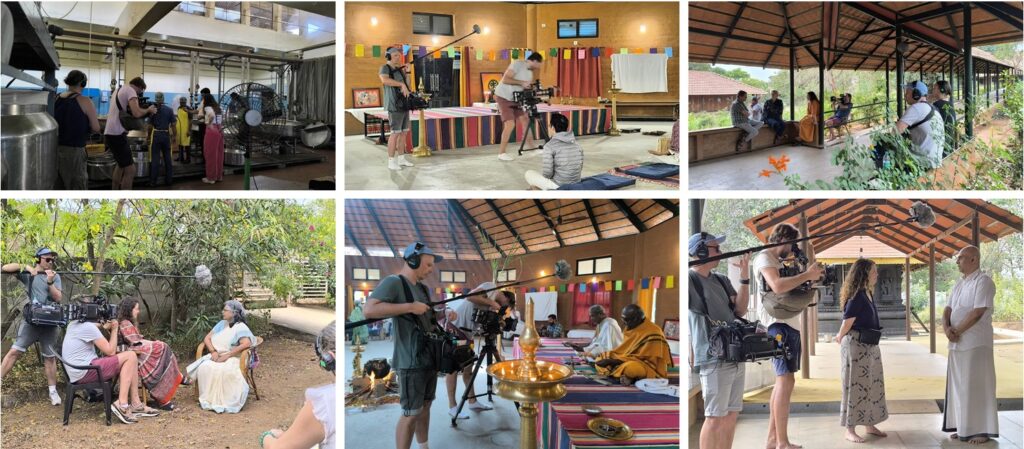
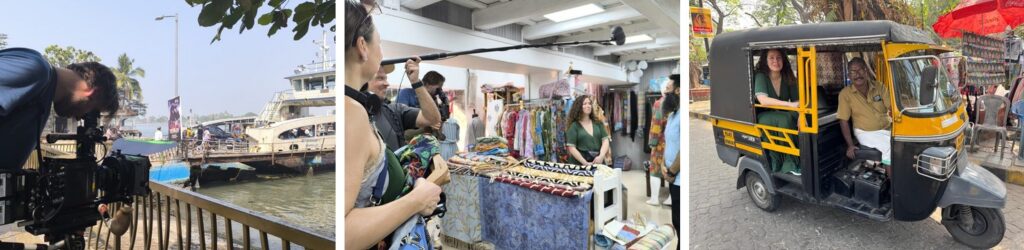
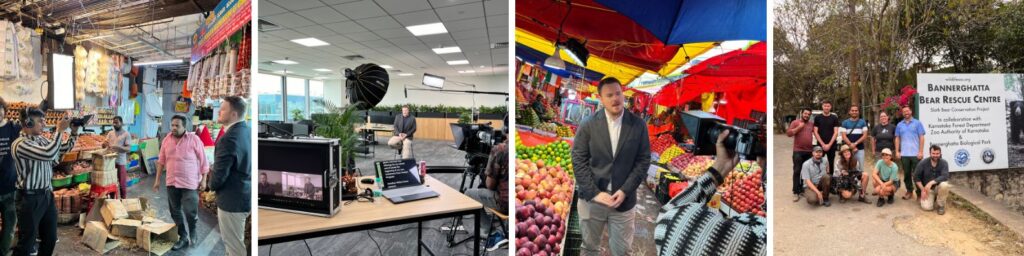
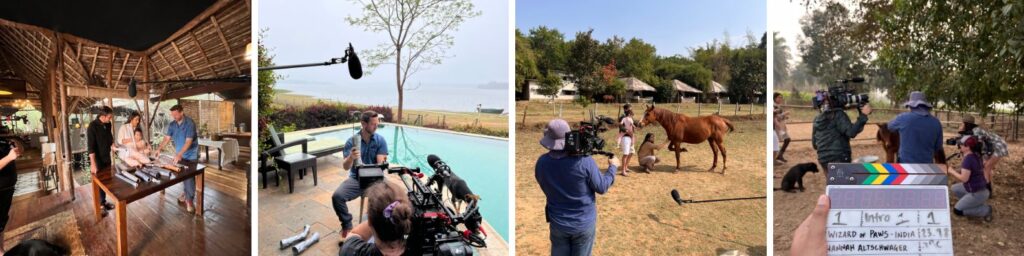
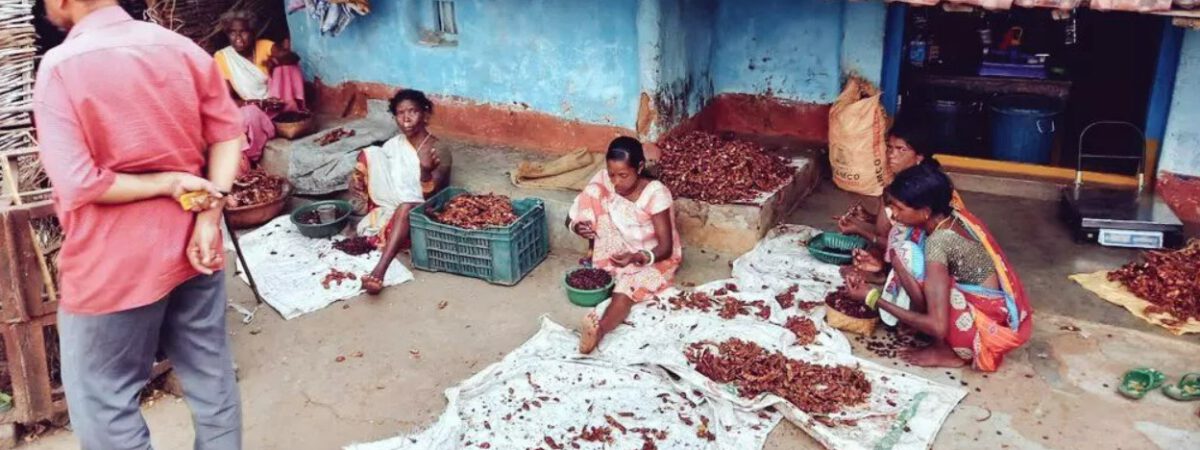
Media Production Fixer Support in Kochi, Kerala, India

In 1998, Ismail Merchant decides to shoot his colonial-era film Cotton Mary in Fort Kochi. Ismail wants the story of an Indian nanny to a British woman to be set in South India. “Why not Kerala? Why not Fort Kochi?” he says. “It is exotic. Cinematically exciting.” Cotton Mary, starring Madhur Jaffrey and Greta Scacchi, becomes the first international movie to be filmed in the Kochi.


Kochi is unique, it is a brilliant mix of the traditional and modern, both in its people and the landscape. Kochi has alsways been the amazing destination for tourists across the world. Its backwaters, house boat rides, lush green countryside, spices and the cobbled streets of Fort Kochi are among the attractions. But Kochi is also a popular with filmmakers, and not only those from within the state but also overseas.

fixers-in-india-kerala-kochi-2

The European buildings and old godowns leading to the backwaters in Fort Kochi can be shorthand not only for Pondicherry or Panaji but also Tuticorin. The other popular locations in Kochi are the Lulu Mall, Chendamangalam and the Tripunthira Hill Palace.


Filmmakers use the city as their base to travel and shoot in nearby areas, such as Athirapally Falls, which is 65 kilometres from Kochi. Another popular location near Kochi is Kuttanad, which is 60 kms from Kochi. Kuttanad’s vast stretches of paddy fields, which have earned it the reputation of Kerala’s rice bowl. Production costs are far lower in Kochi than in cities like Mumbai, and permissions are far easier to obtain.

fixers-in-india-kerala-kochi

Filming Indo Services in Kochi, Kerala

  1. Filming in Kochi, Kerala : Filming in Kochi, Kerala, India.
  2. Filming permission in Kochi, Kerala : We obtain filming permission in Kochi, Kerala, India.
  3. Filming permit in Kochi, Kerala : We obtain filming permit in Kochi, Kerala, India.
  4. Film and Journalist Visa assistance in Kochi, Kerala : We provide visa assistance in Kochi, Kerala, India.
  5. For film – Step by Step Guide | Film Facilitation Office
  6. For documentary – MEA | Media Center | Documentary Filming in India
  7. Fixer in Kochi, Kerala : We work as a fixer in Kochi, Kerala, India.
  8. Line producer in Kochi, Kerala : We work as a line producer in Kochi, Kerala, India.
  9. Location scouting in Kochi, Kerala : We arrange location scouting in Kochi, Kerala, India.
  10. Aerial filming in Kochi, Kerala : We do aerial filming in Kochi, Kerala, India. We do drone rental and Hot Air Balloon Rental in Kochi, Kerala.
  11. Casting in Kochi, Kerala : We do casting in Kochi, Kerala, India.
  12. Shooting equipment in Kochi, Kerala : We provide shooting equipment in Kochi, Kerala, India.
  13. Camera rental in Kochi, Kerala : We do camera rental in Kochi, Kerala, India.
  14. Grip rental in Kochi, Kerala : We do grip rental in Kochi, Kerala, India.
  15. Light rental in Kochi, Kerala : We do light rental in Kochi, Kerala, India.
  16. Shooting locations in Kochi, Kerala : We provide shooting locations in Kochi, Kerala, India.
  17. Shooting permission in Kochi, Kerala : We provide shooting permission in Kochi, Kerala, India.
  18. Translator & Interpreter in Kochi, Kerala : We provide translator in Kochi, Kerala, India.
  19. Underwater filming in Kochi, Kerala : We do underwater filming in Kochi, Kerala, India.
  20. Remote Production in Kochi, Kerala : We shoot the video in a seamless and secure way through offering our expertise to you for remote production in Kochi, Kerala, India.


Just send an email to info@filmingindo.com and let’s get started!

fixers-in-india-kerala

Fixer in Bengaluru Karnataka (1)Fixer in Bengaluru Karnataka (2)
Fixer in Bengaluru Karnataka (4)


We are Government of India recognized Fixer & Line Production Company in India

ffo filming indo fixer India………………………………

Behind the Scenes from our Recent Works as a FIXER in INDIA

видеосъемки в Индии

Производство видеофильмов в Индии

India-Fixer-Delhi-Filming-IndoIndia-Fixer-Delhi-Filming-Indo


CLICK HERE TO SEE MORE WORK  


CLIENTS FEEDBACK WHO HIRED US AS A FIXER IN INDIA


Film Shooting Location/Video Production Services In Bengaluru, Karnataka, India

Karnataka, being one of the most charming States in the country, has attracted multitudinous filmmakers over the times. Here we are sharing a list of some of the exciting Filming locations in Karnataka that are used for shooting film in the State.

Coorg

Rightfully called the ‘ Scotland of India, ’ Coorg is the epitome of nature’s appeal. Sprawled with coffee estates, the hill station is an ideal escape for nature addicts and adventure addicts. The fascinating geography and scenic beauty of this place have made it the right choice for movie blowups. Several Kannada cinema have been shot there for numerous times, similar as ‘ Gaalipata ’ and ‘ Mungaru Male. ’ The notorious Bollywood movie ‘ 7 Khoon Maaf ’ was also pictured then.

Bangalore Palace

One of Bangalore’s popular corners, this heritage structure is known for its marvellous infrastructure. therefore, it has always been a hotspot for the filming of cinema. colorful pictures have been shot then, including ‘ Bharaate, ’ ‘ CoolieNo. 1, ’ and ‘ Rowdy Rathore ’.

Hampi

The UNESCO World Heritage Site, Hampi, is a treasure trove of striking armature dating back to the Vijayanagara Empire. With the remains of several Palaces, Temples, and other Shrines, Hampi is an ideal place for filming hollywood movies. Besides several Kannada and Hindi pictures, the English movie ‘ The Myth ’ has also been shot there. Since it’s a heritage point, previous authorization needs to be taken for filming.

Nandi Hills

One of the most popular getaways from Bangalore, Nandi Hills, is another spot where multitudinous cinema are shot. The charming beauty, clear air, and picture-perfect views of Nandi Hills are ideal for film shooting of foreign moviews. ‘ Potre Loves Padma ’ is one of the notorious pictures shot at the Nandi Hills.

Badami Caves Temple

Sculpted out of sandstones, these caves are exemplary of spectacular armature. Located in Bagalkote, it’s one of the most sought- after sightseer lodestones in the State. constructed in the 6th century by the Chalukyas, the site forms an exquisite background for movie scenes. notorious pictures like ‘ Magadheera, ’ ‘ Rowdy Rathore, ’ and ‘ Guru ’ were shot at Badami Caves Temple.

Shimoga

With the perfect mix of nature, wildlife, peace, and church, Shimoga is indeed one of the loveliest destinations in Karnataka. The world- famed Jog falls are among the top filming spots in this region. The pristine beauty of this place, when captured in cameras, enthralls the film lovers in no time. The TV series, ‘ Malgudi Days, ’ was filmed at this site only. Besides this, Tamil film, ‘ Kumki, ’ and Kannada film, ‘ Kanoor Heggadati, ’ are also filmed here at Shimoga.

Brindavan Garden, Mysore

There are a many gardens as beautiful as the Brindavan Garden in Mysore. Filled with fountains, rainbow flower beds, a serene lake, and horticulture granges, Brindavan Garden is a must- visit sightseer place in Mysore. Due to its alluring beauty, it has been a top fave for filmmakers as well. colorful 80’s cinema have been shot here as well.


No wonder that enchanting beauty, architectural grandness, and natural marvels have kept movie makers hooked up to Karnataka.


Filming Indo Services in Bengaluru, Karnataka

  1. Filming in Bengaluru, Karnataka : Filming in Bengaluru, Karnataka, India.
  2. Filming permission in Bengaluru, Karnataka : We obtain filming permission in Bengaluru, Karnataka, India.
  3. Filming permit in Bengaluru, Karnataka : We obtain filming permit in Bengaluru, Karnataka, India.
  4. Film and Journalist Visa assistance in Bengaluru, Karnataka : We provide visa assistance in Bengaluru, Karnataka, India.
  5. For film – Step by Step Guide | Film Facilitation Office
  6. For documentary – MEA | Media Center | Documentary Filming in India
  7. Fixer in Bengaluru, Karnataka : We work as a fixer in Bengaluru, Karnataka, India.
  8. Line producer in Bengaluru, Karnataka : We work as a line producer in Bengaluru, Karnataka, India.
  9. Location scouting in Bengaluru, Karnataka : We arrange location scouting in Bengaluru, Karnataka, India.
  10. Aerial filming in Bengaluru, Karnataka : We do aerial filming in Bengaluru, Karnataka, India. We do drone rental and Hot Air Balloon Rental in Bengaluru, Karnataka.
  11. Casting in Bengaluru, Karnataka : We do casting in Bengaluru, Karnataka, India.
  12. Shooting equipment in Bengaluru, Karnataka : We provide shooting equipment in Bengaluru, Karnataka, India.
  13. Camera rental in Bengaluru, Karnataka : We do camera rental in Bengaluru, Karnataka, India.
  14. Grip rental in Bengaluru, Karnataka: We do grip rental in Bengaluru, Karnataka, India.
  15. Light rental in Bengaluru, Karnataka : We do light rental in Bengaluru, Karnataka, India.
  16. Shooting locations in Bengaluru, Karnataka : We provide shooting locations in Bengaluru, Karnataka, India.
  17. Shooting permission in Bengaluru, Karnataka : We provide shooting permission in Bengaluru, Karnataka, India.
  18. Translator & Interpreter in Bengaluru, Karnataka : We provide translator in Bengaluru, Karnataka, India.
  19. Underwater filming in Bengaluru, Karnataka : We do underwater filming in Bengaluru, Karnataka, India.
  20. Remote Production in Bengaluru, Karnataka : We shoot the video in a seamless and secure way through offering our expertise to you for remote production in Bengaluru, Karnataka, India.


For any inquiries, please contact us at info@filmingindo.com

5 historical temples of India where, dogs are worshiped instead of gods & goddesses

You must have seen a lot of temples of gods and goddesses where people worship their respective gods, but have you seen such temples where dogs are worshiped, not gods and goddesses? Of course, it is a matter of faith. This temple of dogs is also a symbol of people’s faith. People’s deep faith is attached to these temples. Thousands of people come here and bow their heads like any religious place. There are many interesting tales and stories related to these temples of dogs. Which you might have also heard. But if you have been unaware of such temples till now, then it is even more important for you to earn this knowledge.

History of a dog temple is 100 years old

DOG TEMPLE INDIA BIZARRE

15 KM from Bulandshahr. In the distant industrial area of ​​Secunderabad, there is a temple about 100 years old, where the tomb of a dog is worshipped. A fair is decorated here on Holi, Deepawali. Bhandars (Open house free Food) are also organized in Sawan and Navratras. It is believed that every wish made here is fulfilled. There is a popular saying that about 100 years ago Laturia Baba lived and a dog also lived with him. It was believed that Laturiya Baba had Siddhiya but Baba could not see with his eyes. If Baba had to order any goods, he would take the help of his dog. His dog was no ordinary dog.


He was so intelligent that when Baba used to put the bag around his neck, he used to go to the market and bring goods for him in it. About 100 years ago, when Baba took samadhi (superconscious state of ecstasy in which the yogi perceives the identity of soul and Spirit) here, the dog also jumped with him in the same samadhi. People took the dog out, but the dog jumped into it again. People took the dog out of Baba’s samadhi many times, but the dog stopped eating and drinking. Laturia Baba had said before sacrificing his life that whenever I am worshiped in future, this dog will be worshiped before me. Since then the worship of this dog started here. It is said that by tying a black thread on the dog’s leg, the wish is fulfilled.

Bhairav ​​Temple of Chipiyana Village

DOG TEMPLE INDIA BIZARRE 2

Bhairav ​​temple of Chipiyana village near Ghaziabad has its own identity in the surrounding area. People come here for worship at the tomb of the dog built in the temple premises. A cistern remains near the tomb of the dog. It is believed that by bathing in the cistern, the effect of diseases like rabies disease, monkey bites, boils and pimples end. People make offerings to the dog statue made here and distribute it to each other. There is also a belief about dog worship that Baba Kal Bhairav’s ride is a dog. That is why the dog is worshiped here.


It is believed that the real story of the dog which has been built in the Bhairav ​​temple here is related to a banjara. It is said that about 100 years ago, a banjara named Lakha had built the tomb of this dog at a place inside the Bhairav ​​temple itself. It is popular about this samadhi that Banjara had a dog. Banjare had borrowed some loan from a Seth (financer). Unable to repay the loan on time, he mortgaged his dog to Seth. A few days later, Seth’s house was robbed. The dog neither barked at the miscreants nor woke Seth up. When Seth came to know about the theft in the morning, he got angry with the dog. After some time, the dog grabbed his Seth’s dhoti and took it to the place where the robbers had pressed the stolen goods. Seth was happy when he found the stolen goods. He freed the dog as a reward and sent it back to Lakha.


But Lakkha Banjare felt that his dog had broken the promise given to Seth. On this he shot his own dog in anger. Even after dying, the dog breathed his last by falling at the feet of Lakha. After this, when Seth came to Lakkha and told the reality, he felt very sorry. As a form of repentance, he got the dog’s samadhi built in the temple of Bhairav ​​Baba. It is believed that even today rabies patients get cured as soon as they offer prasad here. On the other hand, taking a bath in the cistern outside the temple ends the effect of dog bite.

Dogs have natural power to protect them from calamities

dog temple bizarre india 3

A dog temple has been built in the village Chinnapatna, which comes under the Ramanagara district of Karnataka. Local people believe that the dog has the natural power to save the family of its owner from calamities. He also foresaw any kind of natural calamity, so this temple has been dedicated to this pet.


In this temple, idols of two dogs have been installed respectfully, which are worshiped on a daily basis. Two idols of dogs are kept in this temple. One of the idols is of white color and the other is of brown colour. They are worshiped by wearing garlands. This temple was constructed in 2010. There was no specific reason behind the construction of this temple, but it has been done to honor the loyalty of dogs towards humans.

Worship of female Dog queen in Jhansi

DOG TEMPLE INDIA BIZARRE 3

You have hardly seen or heard about the temple of female Dog queen. Yes, this temple built on the side of the road in Revan village of Mauranipur town, 65 km from Jhansi, can become a cause for shock for anyone. The idol of a bitch is installed in the temple. Local people come daily to offer water to the statue. There is no one who leaves without bowing his head in front of this statue. The female Dog queen installed in the temple is considered a symbol of patience.


There are Rewan and Kakwara villages in the Mauranipur area of ​​Jhansi. This temple is established between the two villages. This temple is built on a high platform. On this the idol of the dog has been installed. The statue of the dog is of black colour. It has been covered by making a small space on the platform. Here women go to worship. Here the worship of the female Dog queen started with an incident. Long ago this dog lived in these two villages. In any program of the village, this dog used to reach for food. People used to feed him also. Once this dog was between these two villages.


In the meantime, the sound of the ramtula (which was played to inform about the food in some program) came from the village of Rewan. Its loud sound reached far and wide. Hearing the sound, the dog reached the village of Revan to eat, but by then Pangat got up. Meanwhile, the sound of ramtula ringing came from Kakwara village. The bitch ran from Revan towards Kakwara, but by the time they reached, the fight ended here too. Village elder Ram Bahadur tells that the dog was ill. She got tired of running between the two villages and tired and sat between the two villages. She died here due to hunger and disease.


People buried the dog at this place. People say that the place where this dog was buried was turned into stone. Seeing this miracle, people built a small temple for the bitch. A few years ago, now the premity of a dog was also established here. People know this temple as dog goddess.

Kukurdev temple Chhattisgarh

DOG TEMPLE INDIA BIZARRE 4

The temple of ‘Kukurdev’ in Khapri village of Durg district of Chhattisgarh is not dedicated to any deity but to a dog. According to the information, this temple was built between 14th to 15th century by the Phani Nagvanshi rulers. Although there are idols like Shivling etc. along with it. It is believed that by visiting here, there is no fear of dog cough and dog bite.

History of the Temple

This temple built between 14th-15th century is very unique. Here in the sanctum sanctorum of the temple a dog statue is installed and there is also a Shivling next to it. The Kukur Dev temple is spread over a radius of 200 meters. Dogs have been installed on both sides at the entrance of the temple. Along with Shiva, people worship Kukurdev in the same way as Nandi is worshiped in common Shiva temples. There are pictures of serpents in all the four directions of the dome in the temple. Inscriptions of the same time are also placed around the temple but are not clear.


…………….. 

FILM IN INDIA

Media Production Fixer Support in India| Filming Indo

If you are in search of JournalistresearcherIndian coordinatorfixerdocumentary film maker or Line Producer to cover any specific stories in India, your search ends here. We at Filming Indo delivers all types of services to our International clients as mentioned above. We promise you to arrange everything on your behalf from interview scheduling, Public Relations to Locations management and logistics. You can leave everything on us. You have to just come to India and shoot your project. Even, if you can not come to India, we can shoot and deliver raw audio-visual footage recorded on best HD cameras to you in timely manner. 

You can email us today on info@filmingindo.com

Guide For Foreign Nationals wanting to do Business with India

Steps to Get a New Company Incorporated in India

  1. Each of the first shareholders and directors of the new company needs to get a Permanent Identification Number (PAN) from Income Tax Department of Government of India
  2. Each of the first shareholders and directors of the new company needs to get Director Identification Number (DIN).
  3. At least one of the promoters must have a digital signature. The digital signature is to be purchased from a company in India.
  4. Decide the state in which the registered office of the company will be located. While it is easy for a company to change the registered office within a state, it is cumbersome and expensive to shift from one state to another.
  5. Decide the Authorized Capital of the proposed company.
  6. Decide whether the company will be a private limited company or public limited company.
  7. Decide the main objects of the company.
  8. Select, in order of preference, at least one suitable name up to a maximum of six names, indicative of the main objects of the company.
  9. Ensure that the name does not resemble the name of any other already registered company and also does not violate the provisions of emblems and names (Prevention of Improper Use Act, 1950) by availing the services of checking name availability on the portal.
  10. Apply to the concerned Registrar of Companies (RoC) to ascertain the availability of name in eForm1 A by logging in to the portal. A fee of Rs. 500/- has to be paid alongside and the digital signature of the applicant proposing the company has to be attached in the form. If proposed name is not available, the user has to apply for a fresh name on the same application.
  11. After the name approval the applicant can apply for registration of the new company by filing the required forms (that is Form 1, 18 and 32) within 60 days of name approval.
  12. Arrange for the drafting of the memorandum and articles of association by the solicitors, vetting of the same by RoC and printing of the same.
  13. Arrange for stamping of the memorandum and articles with the appropriate stamp duty.
  14. Get the Memorandum and the Articles signed by at least two subscribers in his/her own hand, his/her father’s name, occupation, address and the number of shares subscribed for and witnessed by at least one person.
  15. Ensure that the Memorandum and Article is dated on a date after the date of stamping.
  16. Login to the portal (www.mca.gov.in) and fill the following forms and attach the mandatory documents listed in the eForms as follows

o Declaration of compliance – Form-1

o Notice of situation of registered office of the company – Form-18.

o Particulars of the Director’s, Manager or Secretary – Form-32.

  • Submit the above-mentioned eForms after attaching the digital signature, pay the requisite filing and registration fees and send the physical copy of Memorandum and Article of Association to the RoC.
  • After processing of the Form is complete and Corporate Identity is generated, obtain Certificate of Incorporation from RoC.


A Practicing Company Secretary is the best person to get the above steps completed. The charges may vary from city to city and also based on the reputation of the Practicing Company Secretary. It is advisable to tell the Company Secretary the proposed authorized share capital, the state in which the company is proposed to be incorporated, number of first shareholders / directors and whether the proposed company will be a private limited or public limited. Based on this information, the Company Secretary will be in a position to give an offer for the total costs including fees payable to the Government, stamp duty, other expenses and his / her fees. Many Chartered Accountants also offer services in relation to incorporating a company. However, strictly speaking, this is the job of a company secretary and not of a chartered accountant.


PAN for Foreign Citizen Resident Outside India

Getting Permanent Identification Number (PAN) from Income Tax Department of Government of India is necessary before one invests in a company in India or becomes a Director in an Indian company. Getting a PAN is a simple process that any foreign citizen resident outside India can do without the need for professional help. One essentially needs two documents – one for proof of identity and one for proof of address.


The documents required are as follows:

Proof of Identity Document

  • Copy of Passport or
  • Other National ID attested by Indian Embassy / Consulate / High Commission / Apostille or
  • Person of Indian Origin (PIO) card issued by Government of India or
  • Copy of Overseas Citizen of India (OCI) card issued by Government of India

Proof of Address Document

  • Copy of Passport or
  • Other National ID attested* by Indian Embassy / Consulate /High Commission /Apostille or
  • Bank account statement in country of residence, duly attested by Indian Embassy /High Commission / Consulate / Apostille in the country where applicant is located or
  • Person of Indian Origin (PIO) card issued by Government of India or
  • NRE bank account statement
  • Overseas Citizen of India (OCI) card issued by Government of India


In essence, if you have a copy of your passport, you do not need anything else. The next step is to visit the website https://tin.tin.nsdl.com/pan/form49AA.html and fill the form 49AA online to apply for PAN.


Bank Accounts of Foreign Residents in Indian Rupees

There are three types of Rupee denominated accounts that a foreign citizen or entity may open with a bank in India:

A Ordinary Non-Resident Rupee (NRO) Accounts)

B Non-Resident (External) Rupee Accounts (NRE Accounts)

C Non-Resident (Non-repatriable) Rupee Deposit Scheme


Ordinary Non-Resident Rupee (NRO) Accounts

NRO account is the simplest form of bank account that any non-resident individual or entity (except from Pakistan or Bangladesh) may open with a bank in India. NRO account does not require approval or permission from Reserve Bank of India or any other authority.

Funds in the NRO account should be used for meeting bona fide expenses and transactions in Indian Rupees. The operations on the accounts do not allow making available foreign exchange to any person resident in India against reimbursement in rupees or in any other manner in India. NRO accounts may be opened / maintained in the form of current, savings, recurring or fixed deposit accounts. The accounts may be held jointly with residents and / or with non-residents.


Indian Visa for Directors and Employees

An Indian company can employ foreign citizens in India as well as outside India. No permissions are needed for this. However, the foreign citizen needs an employment visa if he / she intends to reside in India. Types of visa (relevant for business) issued by India are as follows.


Business – Up to 5 years – Multiple Documents to prove bonafide purpose (Company’s letter, etc.), proof of financial standing


Business Visa

A Business visa may be granted to a foreigner for the following purposes (relevant to this Guide):-

  1. Foreign nationals who wish to visit India to establish industrial/business venture or to explore possibilities to set up industrial/business venture in India.
  2. Foreign nationals coming to India to purchase/sell industrial products or commercial products or consumer durables.
  • Foreign nationals coming to India for technical meetings/discussions, attending Board meetings or general meetings for providing business services support.
  1. Foreign nationals coming to India for recruitment of manpower.
  2. Foreign nationals who are partners in the business and/or functioning as Directors of the company.
  3. Foreign nationals coming to India for consultations regarding exhibitions or for participation in exhibitions, trade fairs, business fairs etc.
  • Foreign buyers who come to transact business with suppliers/ potential suppliers at locations in India, to evaluate or monitor quality, give specifications, place orders, negotiate further supplies etc., relating to goods or services procured from India.
  • Foreign experts/specialists on a visit of short duration in connection with an ongoing project with the objective of monitoring the progress of the work, conducting meetings with Indian customers and/or to provide technical guidance.
  1. Foreign nationals coming to India for pre-sales or post-sales activity not amounting to actual execution of any contract or project.
  2. Foreign trainees of multinational companies/corporate houses coming for in-house training in the regional hubs of the concerned company located in India.
  3. Foreign nationals coming as tour conductors and travel agents and / or conducting business tours of foreigners or business relating to it, etc.


Documents required for grant of business visa are as follows:

  1. A valid travel document and a re-entry permit, if required under the law of the country concerned.
  2. Proof of financial standing and expertise in the field of intended business.
  3. Documents/ papers pertaining to proposed business activity such as registration of the company under the Companies Act, proof of registration of the firm with the State Industries Department or the Export Promotion Council concerned or any recognized promotional body in the relevant field of industry or trade etc.


Local Taxes

Local Taxes are levied by either municipal corporations (in case of cities) or by village panchayats (in case of villages). The freedom of a municipal corporation or village panchayat is limited by the relevant Act passed by State Legislature.


Property Tax

Property tax is collected by municipal or village authorities based on the estimated rental value that a property is expected to fetch. Rates of property tax vary greatly from city to city. However, in general, the first step is to estimate the annual rental value. Most cities have elaborate norms for estimation of annual rental value based on the locality, type of construction, usage of property and the floor area of property. Property Tax is a percentage of the estimated annual value and is around 10-20% of the annual rental value. It is customary for the property owner (and not the tenant) to pay the property tax.


Water Charges

Strictly speaking, this is not a tax but a charge based on actual consumption. However, in most cities of India water charges are not collected based on water consumption since water metering is not very common. In most cities households are provided a 12 mm pipe connection and a fixed charge per household is levied. This is in the range of about Rs. 100 to Rs. 200 per month. Rates for commercial establishments and industries are much higher and are often based on actual usage.


Business Culture

India is a relationships-driven society. Everyone is connected to everyone else with whom one does business. Dealing with strangers is avoided – reasons for this are not too far to seek. With a judicial systems that is slow, expensive and unpredictable, one wants to avoid going to courts. If one is dealing with someone on whom one can exert some pressure, whether it is emotional or from relatives and friends, one is assured of some recourse if matters turn sour.


Relationships are built upon mutual trust and respect. In general, Indians prefer to have long-standing personal relationships prior to doing business. It may be a good idea to go through a third party introduction. This gives you immediate credibility. Doing business in India involves spending a lot of time building relationships with all sort of people whether in business or in government or in community or in politics.


This is strange for foreigners who come to India from Western Europe or USA. However, this does not surprise anyone who has done business in most of Africa or South America or Asia. It is not unusual for business associates to try to establish relationships that extend to families and friends. This seems strange to western mindset where business and personal life are kept separate. The dividing line in India is either non-existent or very thin.


So, if you receive a request from your Indian associate to go to a picnic together with families on the weekend, do not be surprised. Language of contracts in India is often flowery and extremely elaborate. Indian advocates and solicitors sometimes draw up such elaborate and complex contract documents that virtually no one bothers to read through the whole of it. It is not uncommon for parties to a contract to rely on the informal or email or verbal assurances that they have among themselves while the formal contract is seen as no more than a necessary evil that one would rather not touch. Indian entrepreneurs and senior managers often work for more than 10 hours a day and work on weekends too.


Calling up business associates on a Sunday or at 8 pm is not considered something extraordinary. India is a hierarchical society. Even in some large cities where due to western influence calling each other by first name has become acceptable, the hierarchical mindset remains deep rooted.


As a general rule, calling people by first name is avoidable unless the person is equivalent or lower to you in age and rank. Anyone who is older (or of higher rank) must be addressed respectfully. This is a hierarchical culture, so greet the eldest or most senior person first. The usual form of greeting does not involve shaking hands even though shaking hands is common. Men may shake hands with other men and women may shake hands with other women; however there are seldom handshakes between men and women. Indians consider it rude to say a clear ‘no’. Indians will offer you the response that they think you want to hear.


Since they do not like to give negative answers, Indians may give an affirmative answer but be deliberately vague about any specific details. This will require you to look for non-verbal cues, such as a reluctance to commit to an actual time for a meeting or an enthusiastic response. A problem that many foreigners face when dealing with Indian business houses over email etc. is the tendency of Indians to fall silent. Often, when an Indian does not wish to pursue the matter further, the tendency is to fall silent rather than close the matter with a clear ‘no’. Indians enjoy eating together. All food on the table must be shared.


The western habit of individual potions being served and each one ordering one’s own food is a strict no-no. A group orders food together. So, before ordering there is quite some discussion to ensure that everyone’s tastes are taken care of and no food is wasted. Often people make compromises only to ensure consensus in the group. For example, if everyone else in the group wants ice cream for dessert, someone who wants coffee is likely to go with the group and have ice cream. If everyone on the table is inclined to have Indian vegetarian food, it will be rude for one individual to order chicken for oneself.


Punctuality is the norm as far as business meetings are concerned. However, on social occasions, where large numbers of people are invited, it is customary to be late. It is advisable to ask others who may be invited to the same event whether it will be appropriate to be late. As a general rule, if someone is waiting for you in particular, you must not be late. On the other hand, if you are faceless part of a large crowd, it is fine to be late. Clothing in almost all business situations is conservative though it is not formal. Women, in particular, are advised to avoid dresses that expose legs or other such body parts.


FILMING INDO

Helps you with Strategic Advice at all stages of business life-cycle

Adviser, Intermediary and Facilitator for Business Relationships

Design of Structures for Cross-border Business Entities

Documentation related to all types of associations & collaborations

Research to help understand Indian laws, rules and regulations

Research based opinion on complex legal issues

Assistance with Dispute Resolution

Hand-holding through setting up and operating a business in India.


We are a law firm that takes an entrepreneur’s perspective on every issue. We do not make money by pushing clients through the arduous process of courts. We think the way you do.


We can be your trusted aide in India

Contact us info@filmingindo.com and we will setup a meeting and take your trouble on us.
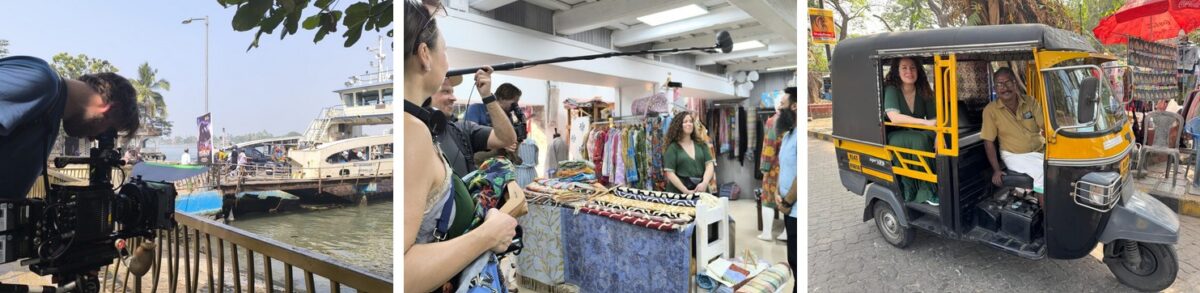
The Magical World of World Cinema: Australian Cinema’s ‘India connection’, many films earned worldwide name

Summary

More recently, Indian-origin writer-director Anita Brar, who has been living in Australia since 1989, has made a documentary called ‘Crossing the Line’, which is being screened at various film festivals around the world. In this, the interviews of the victims of Partition of India have been recorded.


History of Australian Film Industry

A film director comes to India, he watches a Hindi film of Bollywood and is shocked. He goes to his home country and makes a film inspired by the dance and songs of the Indian film and wins an Oscar for this film. The name of the film is ‘Moulin Rouge’ and the director is Baz Luhrmann. Baz Luhrmann comes from Australia. Today we are talking about the cinema history of Australia.


The film began to be shown in Australia at the very beginning of cinema. In the last decade of the nineteenth century, films were being shown there with the help of the Edison Kinetoscope. In 1894, James McMahon opened the first Kinetoscope parlor in Sydney. It was created by converting a shop. Customers could watch the film on the machine for a shilling. Only one person was allowed to watch movies at a time. But the enthusiasm of the audience was worth watching.


According to a source 22,000 people watched the film in the first five weeks, another source said it attracted 25,000 people in the first month. After Sydney, Kinetoscope roamed Australia for a year and showed the film to the public. When he returned to Sydney in 1896, he did not have any new films, and in the meantime the film was being shown on projectors, so the market for the kinetoscope collapsed.


It is believed that on 22 August 1896, the magician Carl Hertz did a film project in Australia for money. He did this at the Harry Records Melbourne Opera House. Today this place is known as Tivoli Theater. That day the film was shown under a variety show.


The first feature film in Australia, The Story of the Kelly Gang, was made in 1906. In 1913, the government there appointed Burt Ivy to capture Australia’s life, landscape, industry, etc. on camera. In 1954, the film division there made a feature length film called ‘The Queen in Australia’ which was the first color film produced by the fund there. The Women’s Film Unit was established in Australia in 1984. Under this, Jane Campion created ‘After Hours’ in the same year.


‘The Melbourne Cup’ and ‘Queen Victoria’s Jubilee’ were the first short films made in Australia for exhibition. From 1898, the Limelight Department of the Salvation Army (a Christian religious organization) also started making short films. These films, equipped with songs, instrument singles and discourses, were shown to the public for their religious propaganda and were used for religious propaganda. Along with this, donations were raised by them, which were helpful in the social work of the Salvation Army.

Australian film industry

By 1900, the film industry had already been established in Australia. At that time Australia was a part of the British Empire. Most producers in Europe set up production facilities in Australia. Movies soon became a part of Australian life, a necessity and a necessity for low-cost entertainment. Today Australian cinema is known for its representation of race, tribal status, sexuality, diaspora.


More recently, Indian-origin writer-director Anita Brar, who has been living in Australia since 1989, has made a documentary called ‘Crossing the Line’, which is being screened at various film festivals around the world. In this the interviews of the victims of Partition of India have been recorded. These are senior citizens of India, Pakistan, Bangladesh living in Australia, who ran for their lives at the time of partition and survived.


A well-known film ‘Crocodile Dundee’ was made in Australia in 1986. In this 97-minute adventure-comedy film, an American reporter travels to Australia to visit an eccentric crocodile hunter and then invites him to New York. Directed by Peter Feiman, the film starred Paul Hogan, Linda Kozlowski, etc., but made a splash in the Australian film world with the 1993 film The Piano, directed by Jane Campion. This 121-minute film is analyzed and studied in institutions around the world.


The film, starring Holly Hunter, Harvey Keitel, Sam Neill and Anna Paquin, gave feminism a point of discussion. It won three Oscar awards.


There has been a lot of experimentation in films in Australia, especially with regard to style and technique. Above we have come to see the talk of ‘Moulin Rouge’. Another experiment was done in 2006 by George Miller. He made the computer-animated jukebox musical comedy film Happy Feet. The Emperor Penguin finds his companion singing. But a penguin is born in this world, which cannot sing, but has a special feature that it can tap dance with pleasure. Don’t confuse it with the ‘March of the Penguins’ made in 2005. Both are very different films.


Amitabh Bachchan, best known for his voice as the narrator in the Indian version of ‘March of the Penguins’, has given vocals. But we are talking about the film ‘Happy Feet’ made in Australia. Nicole Kidman has also lent her voice to it along with many others.


Before this, in 2002, a film was made in Australia, seeing which the audience is forced to contemplate. The film is a biopic of less than an hour duration. The film is based on the subject of Australia of 1931 and the inhuman law applicable there. Where in the name of goodness the Lord keeps the tribal children of this country away from their families and works to make them slaves / servants in the name of education. Children or rather these girls are not completely tribal, they have mixed white blood, but since their white father does not take responsibility for them, they live with their mother, so they are still attached to their civilization-culture .


In this film by director Philip Noyes, the administration does the work of destroying this civilization-culture and childhood in a planned manner. In this, non-professional people have acted and acted amazingly.


After the end of the film, facts and figures related to this lost generation emerge on the screen. If you haven’t seen it yet, then definitely watch the movie ‘Rabbit-Proof Fence’. ‘Chopper’, ‘Shine’, ‘Lion’, ‘I’m a Mother’, ‘Red Dog’, ‘Careful, He Might Here You’ are some other notable films from Australia that should be watched. The film making process continues in Australia.


…………….. 

FILM IN INDIA

Media Production Fixer Support in India| Filming Indo

If you are in search of JournalistresearcherIndian coordinatorfixerdocumentary film maker or Line Producer to cover any specific stories in India, your search ends here. We at Filming Indo delivers all types of services to our International clients as mentioned above. We promise you to arrange everything on your behalf from interview scheduling, Public Relations to Locations management and logistics. You can leave everything on us. You have to just come to India and shoot your project. Even, if you can not come to India, we can shoot and deliver raw audio-visual footage recorded on best HD cameras to you in timely manner. 

You can email us today on info@filmingindo.com


Lifestyle of Chenchu ​​Tribe in India, still hunt for food

Chenchu ​​tribe is a very strange tribe of India. Which are found in Andhra Pradesh, Odisha, Telangana and Karnataka. Among the South Indian tribes, Chenchus are one of the most progressive tribes in the country. They are a food gathering tribe that lives within the Nallamala forests of Andhra Pradesh. For many centuries, Chenchus have been living in harmony with wild & dangerous animals in the deep forest of Nallamala.

History of Chenchu Tribal

Chenchu ​​tribe of India 3

Every tribe has a history. Similarly, the Chenchu ​​tribe has also been following a tradition for the last several decades. Which even today is mainly dependent on forests for its food. Where they do not do any kind of farming for their food, but depends entirely on hunting. A Chenchus villages are known as Penta. Each penta consists of a few huts that are grouped together based on family ties who live near relatives and those who live far away.

Customs of Chenchu Tribal

Chenchu ​​tribe of India 5

It is said that the Chenchu ​​tribe of Andhra Pradesh is very clear and precise about their views. On the other hand, if it is a matter of heart, that this tribe can marry anyone as per their choice. There is no family pressure on them. This tribe is divided into different gotras (sects). Where they are strictly forbidden to marry in one gotra. On the other hand, if the marriage breaks down in some way, then they can get married again. The most important thing is that in the event of divorce, more importance is given to mutual consent, which is still rarely seen in the common society. Another point to note is that widow-marriage is not considered bad in this tribe.

Habits of Chenchu Tribal

Chenchu ​​tribe of India 7

Chenchu ​​tribe are hunters who use bow and arrow and small knives to hunt wild animals like boar, deer, lizard, rabbit and wild birds. Their food is quite simple and usually consists of gruel made from sorghum or maize and boiled or cooked jungle tubers. The Chenchus collect forest roots, fruits, tubers, bidi leaves, mahua flowers, honey, gum and green leaves and sell it to traders and government cooperatives.

Effects of Uranium Mining on Chenchu Tribal

Chenchu ​​tribe of India effect of uranium mining suffering

The rich biodiversity of Nallamala forests may be seriously threatened due to uranium mining.


The hills and valleys of Nallamala come under the catchment area of ​​Krishna River. Uranium mining has adverse effects on the flow of the Krishna River, as well as the effects of leaching of uranium into the water, which can have serious impacts on marine and terrestrial biodiversity.


Rich medicinal flora is found in these forests and animals like tiger, leopard, bear and spotted deer reside here. Two blocks were identified for uranium mining in Amrabad Tiger Reserve but the mining work is being opposed by NGOs, environmentalists and local citizens. This type of mining would have adverse effects on plants and animals as well as agriculture, air and drinking water.

Ban on uranium mining in Nallamala forests

The Chenchu ​​tribals reside in this area, their social, cultural and livelihood would have been adversely affected by mining activities. Telangana Assembly has passed a resolution to stop uranium mining in Nallamala forests.


…………….. 

FILM IN INDIA

Media Production Fixer Support in India| Filming Indo

If you are in search of JournalistresearcherIndian coordinatorfixerdocumentary film maker or Line Producer to cover any specific stories in India, your search ends here. We at Filming Indo delivers all types of services to our International clients as mentioned above. We promise you to arrange everything on your behalf from interview scheduling, Public Relations to Locations management and logistics. You can leave everything on us. You have to just come to India and shoot your project. Even, if you can not come to India, we can shoot and deliver raw audio-visual footage recorded on best HD cameras to you in timely manner. 

You can email us today on info@filmingindo.com


After cow dung, now Indian state Chhattisgarh government starts buying cow urine from farmers

Along with buying cow dung under ‘Godhan Nyay Yojana’, Chhattisgarh government will now buy cow urine. Where cow dung is being bought at Rs 2 per kg, cow urine will be bought at Rs 4 per litre.

After cow dung, now Indian state Chhattisgarh government starts buying cow urine from farmers

After purchasing cow dung, now the Chhattisgarh government has started buying cow urine starting from July 28, 2022 on the day of Hareli Tihar celebrated in Chhattisgarh. In Chhattisgarh, a plan is being made to use cow urine as an eco-friendly manure. Under this, it will be procured from the farmers. Through this, a target has been set to promote organic farming in the state to increase the income of farmers.


The state of Chhattisgarh has made cow dung a very important part of rural development and economic model by introducing cow dung procurement. Earlier, cattle ranchers used to use cow dung to make bunds, which could earn only a modest income. But now the cattle farmers and farmers are getting additional income from the government’s Godhan Nyay scheme.


The purchase of cow urine will be done under the Godhan Nyay Yojana being run by the Chhattisgarh government, which was started two years ago in the state. This is a major scheme of Chhattisgarh. So far, cow dung is being bought at Rs 2 per kg, while cow urine will be bought at Rs 4 a litre.


A study was conducted by Kamdhenu Vishwavidyalaya and Indira Gandhi Agricultural University in Chhattisgarh to assess the increasing need for value addition of cow urine. Based on the report of the study, the Chhattisgarh cabinet has approved the proposal for purchase of cow urine.


According to animal census, there are 1.5 crore cattle in Chhattisgarh, out of which 98 lakh are bovine, of which 48 lakh are males and 50 lakh are females. According to these figures, there can be a big revolution in the state with the Godhan Nyay scheme. To take advantage of the scheme, the applicant animal owner should be a permanent resident of Chhattisgarh state and it is mandatory to register him.


***

Story Credit: गांव कनेक्शन


…………….. 

FILM IN INDIA

Media Production Fixer Support in India| Filming Indo

If you are in search of JournalistresearcherIndian coordinatorfixerdocumentary film maker or Line Producer to cover any specific stories in India, your search ends here. We at Filming Indo delivers all types of services to our International clients as mentioned above. We promise you to arrange everything on your behalf from interview scheduling, Public Relations to Locations management and logistics. You can leave everything on us. You have to just come to India and shoot your project. Even, if you can not come to India, we can shoot and deliver raw audio-visual footage recorded on best HD cameras to you in timely manner. 

You can email us today on info@filmingindo.com

Tamarind cake became the source of income for the tribal women of Odisha

In Odisha’s Rayagada, the tribal community is making cakes from tamarind and selling it in the market, which is also earning them good profits. Which are easily found in the forests of Bisamtaktak and Kashipur blocks.


Manasi Gomanga, a tribal from Bisamaktak block in Rayagada district of Odisha, was earlier confined to cooking and taking care of her children, but ever since she started making cakes with tamarind, she takes pride in her work. “Ever since I started contributing to my family’s meager income by making tamarind cakes, I can see a new respect for myself in the eyes of my husband and kids. Our living conditions have improved and we are now able to earn every month. 4,000 to Rs 5,000,” Gomanga said.


Odisha's Rayagada, the tribal community is making cakes from tamarind 2Gomanga is among 600 women from Bisamaktak and Kashipur blocks in Rayagada district of Odisha who have been encouraged by the Odisha Rural Development and Marketing Society (ORMAS) to earn a livelihood by using tamarind in abundance, both of which are located in the forests. is found in. “Tamarind trees are widely available in the district. Due to lack of right market, tribal people have to sell tamarind to middlemen and traders at throwaway prices. Hence, in 2021, we have organized systematic production of tamarind cakes. and to provide a market,” Deputy Chief Executive Officer of ORMAS in Raigad said.

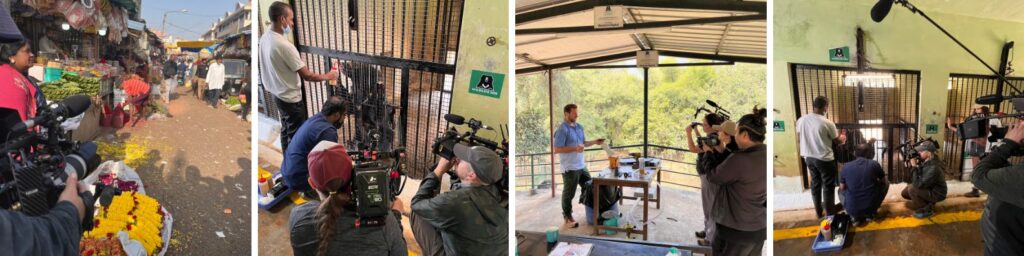
 

Deputy Chief Executive Officer of ORMAS said that since the tribal women have been encouraged to participate in the ORMAS initiative, the production of tamarind has increased which has resulted in better income for the local residents. “Moreover, the increased production is met with higher demand due to market linkage. We have been able to reach markets both within and outside the state. We get orders for our tamarind cakes from several reputed food companies. We are also selling tamarind seeds to several pharmaceutical companies,” Deputy Chief Executive Officer of ORMAS said.


The ORMAS initiative to support tribal livelihoods began with the formation of 11 ‘Producer Groups’, comprising about 600 tribal women. Deputy Chief Executive Officer of ORMAS said, “ORMAS gave Rs 10,000 to each producer group. In addition, equipment worth Rs 100,000 was provided to each of these groups for capacity building to facilitate efficient production and packaging.”


The cost of tamarind seeds is Rs 12 per kg and that of tamarind cake weighing 500 grams is Rs 78, the official said. “During the tamarind season which extends from May to June, the tribal population collected a total of 156 metric tonnes of tamarind from the forests of Rayagada district and sold it to us at Rs 36 per kg, which is fixed by the state government minimum support price, Chief Executive Officer of Rayagada-based Dharti Producers Company said.


A few years back, tribals used to sell tamarind to middlemen and traders much below the MSP. Tribal women peel seeds from tamarind at our centre. We sell seedless tamarind at Rs 62 per kg. We are providing them also. Technical support for preparation of Tamarind Cake. A large number of tribal families are getting additional income due to the huge demand for tamarind cake and seeds. Tamarind seeds contain potassium which may be useful for patients suffering from high blood pressure and other heart diseases.


In addition, tamarind seed juice is known to be a natural remedy for curing indigestion and increasing the production of pitta. In addition, it is rich in dietary fiber, which results in a reduction in cholesterol. The red outer covering of tamarind seeds effectively cures diarrhea and dysentery. Tamarind seed extract also contains xyloglucan which is used in the commercial preparation of many cosmetic and pharmaceutical products. They are also used topically to treat minor skin rashes.


Story Credit: गांव कनेक्शन


…………….. 

FILM IN INDIA

Media Production Fixer Support in India| Filming Indo

If you are in search of JournalistresearcherIndian coordinatorfixerdocumentary film maker or Line Producer to cover any specific stories in India, your search ends here. We at Filming Indo delivers all types of services to our International clients as mentioned above. We promise you to arrange everything on your behalf from interview scheduling, Public Relations to Locations management and logistics. You can leave everything on us. You have to just come to India and shoot your project. Even, if you can not come to India, we can shoot and deliver raw audio-visual footage recorded on best HD cameras to you in timely manner. 

You can email us today on info@filmingindo.com


Film Fixer Services in Thiruvananathapuram, Kerala India

About Kerala

Kerala (State of India) is the most famous state of South India. It is the birthplace of Adiguru Shankaracharya. The name of this state of South India was Travancore before independence.


But after independence, on 1 July 1949, the name of Travancore was changed to Kerala. The natural beauty of Kerala, situated on the banks of the Araval Sea, is amazing.


Here too, like Assam and Darjeeling, the tea gardens spread far and wide make the mind happy. This state, surrounded by mountains, valleys, beaches, hill stations and lush green plains, attracts tourists a lot.


Beautiful mountains, dense forests, deep rivers, and rare wildlife make this state a different identity. Kerala is counted among the advanced states of India.


Kerala, situated on the sea coast for the agama water, is famous for the trade of spices since ancient times. This state is counted in the literate state. Kerala is the first state in India to have a literacy rate close to 100%.


Kerala is also blessed with a variety of flora and fauna in nature. In this article the history, language, festivals, costumes, culture etc. of Kerala are described in detail.


Alappuzha aka Alleppey – Baaghi (2016), Munnar – Chennai Express (2013), Thekkady, Idukki – Dil Se (1998), AthirapallyWaterfalls – Guru (2007) and a lot more. All these movies have done really great job on box office.

Places for shooting in Kerala

fixer line producer kerala india filming indo 2

There are a lot of famous monuments located in Kerala which are really great for film shooting. Some of them are Alleppey, Kochi, Thekkady, Munnar, Thrissur, Kovalam, Thiruvananthapuram, Kozhikode and Kannur.


Kerala is a home to clear backwaters. It is said that the true beauty of this state lies in its islands.


So, take a look at the following list of islands in Kerala and get mesmerized by its beauty.

  1. Poovar Island
  2. Pathiramanal Island
  3. Dharmadam Island
  4. Willingdon Island
  5. Munroe Island
  6. Kuruvadweep Island
  7. Vypin Island
  8. Kavvayi Island
  9. Bolgatty Island
  10. Vini’s Farm

What can Filming Indo do for you?

Filming Indo can help you with all the assistance for line production and remote production. We are here to help you from getting all the permissions to providing you with all the equipment required for the documentary or the film. Our team can help you with all the research work and script assistance.

Filming Indo Production Services in Thiruvananathapuram, Kerala India

  1. Filming in Kerala : Filming in Thiruvananathapuram, Kerala India.
  2. Filming permission in Kerala : We obtain filming permission in Thiruvananathapuram, Kerala India.
  3. Filming permit in Kerala: We obtain filming permit in Thiruvananathapuram, Kerala India.
  4. Film and Journalist Visa assistance in Kerala: We provide visa assistance in Thiruvananathapuram, Kerala India.
  5. For film – Step by Step Guide | Film Facilitation Office
  6. For documentary – MEA | Media Center | Documentary Filming in India
  7. Fixer in Kerala : We work as a fixer in Thiruvananathapuram, Kerala India.
  8. Line producer in Kerala : We work as a line producer in Thiruvananathapuram, Kerala India.
  9. Location scouting in Kerala : We arrange location scouting in Thiruvananathapuram, Kerala India.
  10. Aerial filming in Kerala : We do aerial filming in Thiruvananathapuram, Kerala India.
  11. Casting in Kerala : We do casting in Thiruvananathapuram, Kerala India.
  12. Shooting equipment in Kerala : We provide shooting equipment in Thiruvananathapuram, Kerala India.
  13. Camera rental in Kerala : We do camera rental in Thiruvananathapuram, Kerala India.
  14. Grip rental in Kerala : We do grip rental in Thiruvananathapuram, Kerala India.
  15. Light rental in Kerala : We do light rental in Thiruvananathapuram, Kerala India.
  16. Shooting locations in Kerala : We provide shooting locations in Thiruvananathapuram, Kerala India.
  17. Shooting permission in Kerala : We provide shooting permission in Thiruvananathapuram, Kerala India.
  18. Translator & Interpreter in Kerala : We provide translator in Thiruvananathapuram, Kerala India.
  19. Underwater filming in Kerala : We do underwater filming in Thiruvananathapuram, Kerala India.
  20. Remote Production in Kerala : We shoot the video in a seamless and secure way through offering our expertise to you for remote production in Thiruvananathapuram, Kerala India.


Just send an email to info@filmingindo.com and let’s get started!

Fixer in Bengaluru Karnataka (1) Fixer in Bengaluru Karnataka (2) Fixer in Bengaluru Karnataka (3) Fixer in Bengaluru Karnataka (4) Fixer in Bengaluru Karnataka (5)


We are Government of India recognized Fixer & Line Production Company in India

ffo filming indo fixer India………………………………

Behind the Scenes from our Recent Works as a FIXER in INDIA

видеосъемки в Индии

Производство видеофильмов в Индии

India-Fixer-Delhi-Filming-IndoIndia-Fixer-Delhi-Filming-Indo


CLICK HERE TO SEE MORE WORK  


CLIENTS FEEDBACK WHO HIRED US AS A FIXER IN INDIA

Tharu tribe of Uttar Pradesh is known for its ancient unique culture fighting for survival

The unique culture of the Tharu tribe living in the villages adjacent to the Nepal border of the Terai region is its identity. If we talk about their culture, then different traditions, food, costumes, religious events and social rites make it unique. Their mesmerizing folk dances are especially famous. Earlier, the people of this tribe, who were dependent only on agriculture, are now becoming self-reliant by joining the mainstream of the society. Due to living in the middle of the forest for centuries, these people are now completely immersed in the wildlife.


tharu tribe in up india cultureThe people of Tharu Community consider themselves to be the descendants of Maharana Pratap. It is said that they are residents of Thar in Rajasthan. During the invasion of the Mughals, Rajput women from there migrated from Rajasthan with the servants and settled in the forests of the foothills of the Himalayas for security. Even after a long wait, when the men of his family could not return, they carried on their lineage by forming a relationship with her servants. In this way their breed was prepared, it got the name of Tharu tribe. This tribe has been given the status of the main tribe in Nepal. In Tharu tribe, other sub-castes including Choudhary, Kusmi, Mahto, Danuwar, Rana, Kumal, Kathariya come.

In the era of modernity, Tharu culture is now visible only on festivals

Tharu society has its own distinct culture. From their living style, language, dialect to dress, everything is different. Tharu men wore high dhoti and fatuhi while women wore ghagra, cholia and uniya. The mirrors are fixed in the Ghagra-choli. Women embroider themselves in clothes and make them beautiful, but gradually their dress changed. Tharu society has also become modern in the wind of modernity. Although many festivals including festivals still give a glimpse of the old culture of Tharu society.


In Tharu society, pulses, rice, snails, fish, pork are very much liked. If we talk about it, the people here eat fish and rice with great fervor. Along with this, they also consume alcohol made from barley and herbs. This wine is called Jad.

Tharu follows Hinduism

Makar Sankranti marks the beginning of the new year of Tharu society. Here the festival of Makar Sankranti is celebrated as Maghi festival, which is the biggest festival in Tharu society. From this day itself begins the new year of Tharu society and all new and auspicious work starts. Along with the rest of Krishna Janmashtami, Navratri, Tijiya, the festival of Charai is celebrated on the big Sunday. It is celebrated in the month of Chaitra. On this day fish, wine, sweet rice and curd etc. are made in the house.


Krishna celebrates with pomp on the Sunday that falls 16 days after Janmashtami. On this day these people worship the deities established in the house. Sakhari make food or prasad. Holi is also their special festival. People of Tharu tribe celebrate Holi for several days. During this evening, Tharu women and men dance fiercely in their traditional clothes.

The social structure of Tharus is very strong

tharu tribe in up culture indiaThe social process of Tharu society is very strong. Tharu society is a matriarchal society. The decision of women in the house remains paramount. The people of the society settle the fight, quarrel or any kind of dispute through Panchayat in the village itself. The head of the Panchayat is called Padhana. His decision is acceptable to all. There is also a goodness in the village, which in a way plays the role of opposition. Apart from this, there is a Bharra in every village, which treats from humans to animals through herbs. Not only this, he also does the work of sweeping. Whether it is grain production or animal hunting, first of all, they offer food to their totem. After that have food. The people of this society are very simple and honest.

By relying on agriculture, now learned to become self-reliant

Agriculture is the main occupation of the people of Tharu society. Along with farming, they also rear cows, buffaloes, pigs, goats and chickens. In this wind of modernity, now Tharu society is also becoming modern. The handicrafts of the women of Tharu society have made their mark in the whole country. Tharu handicrafts is also selected in one district one product. Tourists visiting Dudhwa Tiger Reserve are eager to see Tharu folk dance and beautify their home by buying handicraft items.

Tharus fight for survival in Dudhwa

Even though it has been 74 years since the country got independence and the Forest Rights Act, which recognizes the rights of the tribal forest dependent communities living in the forests, was passed in the Parliament long ago, but the tribals who have protected the forest for generations living in the forest areas. Freedom for the communities is still a distant dream.


In order to get rid of the chains of these slavery, on July 31, 2013, more than 3,000 women from 17 villages out of 46 villages of Tharu tribe settled in Dudhwa National Park and Tiger Reserve area of ​​Uttar Pradesh gave forest rights in the Rules Amendment-2012. Presented their collective claim of right to resources in a unique way before the officers by performing traditional Hori dance.


In fact, under the above law, the people here have the right of access to collect forest resources, the right to transport their means of transport, use of all the minor forest produce obtained from the forest and the formation of cooperative societies. For this the right to sell it in the market has to be recognized. But it hasn’t landed on the ground yet. However, in areas where people have become vocal, strong forces like the Forest Department and so-called wildlife lovers working for private interests are becoming a hindrance.


It is to be noted that in 1978, when this forest area was notified as Dudhwa National Park, then the village Soorma falling in its core zone and village Golbozhi falling in the buffer zone were given displacement orders. The people of Soorma village filed a petition in the Allahabad High Court in 1980, but in the judgment that came after 23 years, the court also gave the seal of displacement.


Not only this, a 2003 Supreme Court order displacing people from Park-Century areas also added salt to the wounds of villages like Soorma. But the people did not leave the path of struggle and they stood in their places.


This movement got more strength when Tharu tribals of Dudhwa region started uniting on the issue of displacement. After the introduction of the Forest Rights Act in December 2006, the agitators started fighting for their rights under the law, due to which the scope of the movement expanded to other villages as well.


Although due to grassroots and political efforts, Soorma, Golbozhi, Kheri and Devipur were recognized with individual rights charters on April 8, 2011, but the fight was still pending.


The Forest Department used to collect one quintal of paddy, 50 kg of wheat, 25 kg of mustard and cash per family per year from Tharu tribal families only in the name of collection of firewood and thatch. At the same time, they also used to give ‘punishments’ like fines ranging from 10 to 50 thousand rupees, brutally beating and sent to jail by imposing sections of hunting and cutting trees on going to the forest.


Not only this, under the Forest Rights Act implemented on January 1, 2008, people could not submit their claims, for this, the Forest Department used to do many tricks. As a result, people intensified the movement to get their rights under the Forest Rights Act.


However, this movement led by Tharu tribal women is in the third phase today. Today, they are not only demanding community rights over forest resources recognized under the law, but are also taking steps to implement them if they are not implemented by the government.


Therefore, the domination of profit making forces under the vested interests in the forest department and the forest area here is almost certain to end. In such a situation, it can be said that the day is not far, when an officially protected area like Dudhwa National Park and Tiger Reserve will be the first such national park in the country, where community self-government will be established and which will follow the basic spirit of the Forest Rights Act. will be protected and promoted.


…………….. 

FILM IN INDIA

Media Production Fixer Support in India| Filming Indo

If you are in search of JournalistresearcherIndian coordinatorfixerdocumentary film maker or Line Producer to cover any specific stories in India, your search ends here. We at Filming Indo delivers all types of services to our International clients as mentioned above. We promise you to arrange everything on your behalf from interview scheduling, Public Relations to Locations management and logistics. You can leave everything on us. You have to just come to India and shoot your project. Even, if you can not come to India, we can shoot and deliver raw audio-visual footage recorded on best HD cameras to you in timely manner. 

You can email us today on info@filmingindo.com